
The Financial Benefits of Sustainable Catering
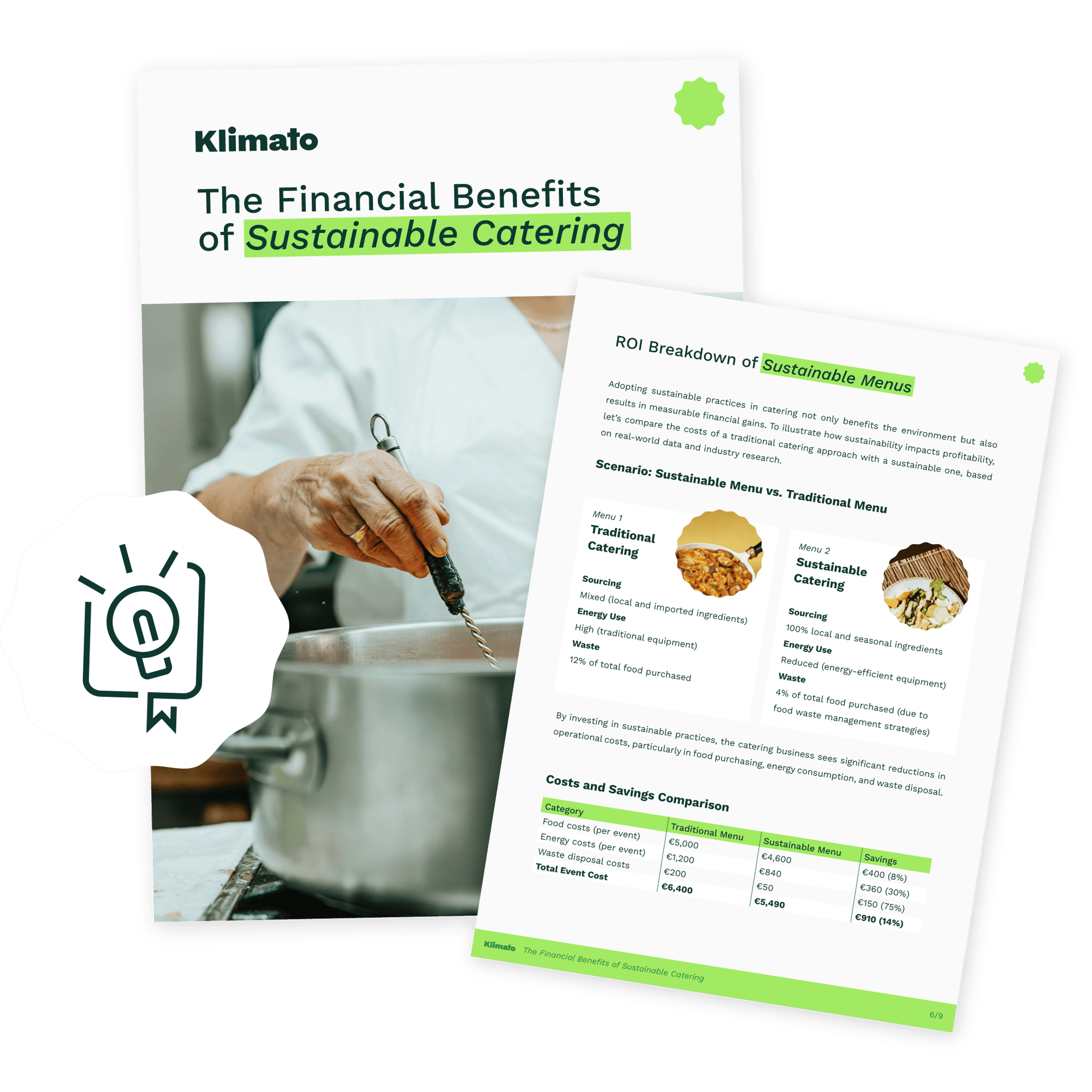
According to the Harvard Business Review, 64% of consumers are more likely to purchase from companies they perceive as environmentally responsible. Today, we’ll explore how catering businesses can enhance profitability by adopting sustainable practices. From reducing food waste to sourcing locally, sustainability provides measurable cost savings and a strong return on investment (ROI), enabling caterers to not only protect the environment but also boost their margins.
Request guide
FAQ About Financial Benefits of Sustainability
.jpg?width=2000&height=1348&name=annie-spratt-80n_J7TsQX0-unsplash%20(1).jpg "annie-spratt-80n_J7TsQX0-unsplash (1)")
What are the financial benefits of sustainable catering?
Sustainable catering delivers financial returns across multiple areas: lower ingredient costs through reduced reliance on expensive high-carbon proteins, less food waste through smarter planning and portion control, stronger performance in sustainability-weighted tenders, and reduced exposure to future carbon taxes and compliance costs. Caterers that treat sustainability as an operational strategy rather than a marketing exercise consistently report improved margins alongside better environmental outcomes. Read about how sustainability practices can drive profitability in food service and 5 ways to boost profit while going green.
How does reducing food waste improve catering profitability?
Food waste is one of the most direct profit leaks in catering operations—every portion that goes uneaten represents ingredient cost, labor, and energy with zero revenue return. Sustainable catering practices that reduce waste through better demand forecasting, tighter portioning, and smarter procurement directly improve the bottom line. At the same time, reducing food waste also reduces carbon emissions, since all the greenhouse gases embedded in wasted food are released with no nutritional benefit. Explore food carbon footprint: tools, methods, and impact and from carbon data to better food decisions.
How does sustainable catering help win more corporate contracts?
Corporate clients increasingly evaluate caterers on sustainability credentials as a core part of procurement decisions, not just price and service quality. Caterers that can demonstrate verified emissions data, active reduction programs, and carbon-labeled menus are better positioned to meet the sustainability scoring criteria now standard in large corporate, public sector, and institutional tenders. This translates directly into a higher contract win rate and stronger client retention. See how sustainable caterers win more contracts with less effort and sustainability criteria in corporate catering tenders explained.
What is the ROI of investing in carbon measurement for a catering business?
The return on investment from carbon measurement in catering comes from several directions simultaneously: identifying and reducing high-cost, high-carbon ingredients improves food margins; verified data strengthens tender responses and client retention; and early compliance investment avoids the higher costs of building measurement capability under regulatory deadline pressure. Caterers that measure accurately can also demonstrate progress to clients, converting sustainability work into a visible commercial differentiator. Read how to maximize ROI with an accurate emissions calculator and the financial benefits of setting climate targets for food procurement.
How does plant-forward menu design improve catering margins?
Plant-forward menus reduce food cost per portion by replacing expensive animal proteins with lower-cost, lower-carbon alternatives—pulses, grains, vegetables, and seasonal produce. With the right development and presentation, these dishes compete on quality and guest satisfaction while delivering significantly better margins. For caterers operating at scale, even a moderate shift in the ratio of plant-forward to meat-heavy dishes can have a material impact on overall food cost percentage. Explore sustainable food production trends shaping the industry and green menu makeover: boost your sales with climate labeling.