






<img height="1" width="1" style="display:none;" alt="" src="https://px.ads.linkedin.com/collect/?pid=6205948&amp;fmt=gif">
Skip to content
Sustainability for Caterers

Scope 1–3 Carbon Reporting
for Contract Caterers

Contract caterers face a reporting challenge that most carbon accounting tools weren't designed for. Your emissions don't sit primarily in owned buildings or vehicle fleets—they sit in thousands of ingredients, hundreds of suppliers, and procurement decisions made daily across multiple sites.

Regulatory requirements are making that complexity urgent. Under CSRD, Scope 3 food emissions are almost always material. Corporate clients are requiring verified emissions data from their supply chain. Tender criteria increasingly include sustainability metrics that need to be backed by credible numbers, not estimates.

Klimato is purpose-built for food businesses, handles the data complexity of large-scale catering operations, and produces Scope 1–3 reporting that holds up under audit—while giving your procurement, operations, and sustainability teams the visibility they need to act.


What's Driving Scope 3 Reporting Urgency for
Caterers Right Now

The Corporate Sustainability Reporting Directive (CSRD)
The Corporate Sustainability Reporting Directive (CSRD) requires large companies to disclose Scope 1, 2, and 3 emissions under ESRS E1. For caterers, Scope 3 food emissions will almost always be material under CSRD's double materiality assessment, meaning they cannot be excluded on the basis of complexity.

Client and corporate procurement requirements
Large corporate clients—particularly those with their own CSRD or SBTi obligations—are increasingly requesting verified Scope 3 data from their catering suppliers.

Tender criteria
Sustainability criteria in public sector and large corporate catering tenders are moving from qualitative commitments to quantitative requirements. Caterers that can present verified carbon footprinting data—at the menu or procurement level—have a demonstrable advantage over those relying on stated intentions.

2026_KFE_product-feature_ report

The Carbon Reporting Challenge For Contract Caterers

Carbon reporting in contract catering is structurally different from most other sectors. Three challenges come up consistently:

Icons-small_lychee-lime_trailer

Scope 3 Dominates, and
It Comes From Food Procurement

In most catering operations, Scope 3 accounts for around 95% of total emissions. The majority of that sits in purchased food and beverages—ingredients, produce, proteins, packaged goods. Scope 1 and Scope 2 reductions matter, but they address a small fraction of total impact. The real emissions story for caterers is in what gets bought, from whom, and how.

Icons-small_lychee-lime_warning

Procurement Data Is Large, Complex, and Not Emissions-Ready

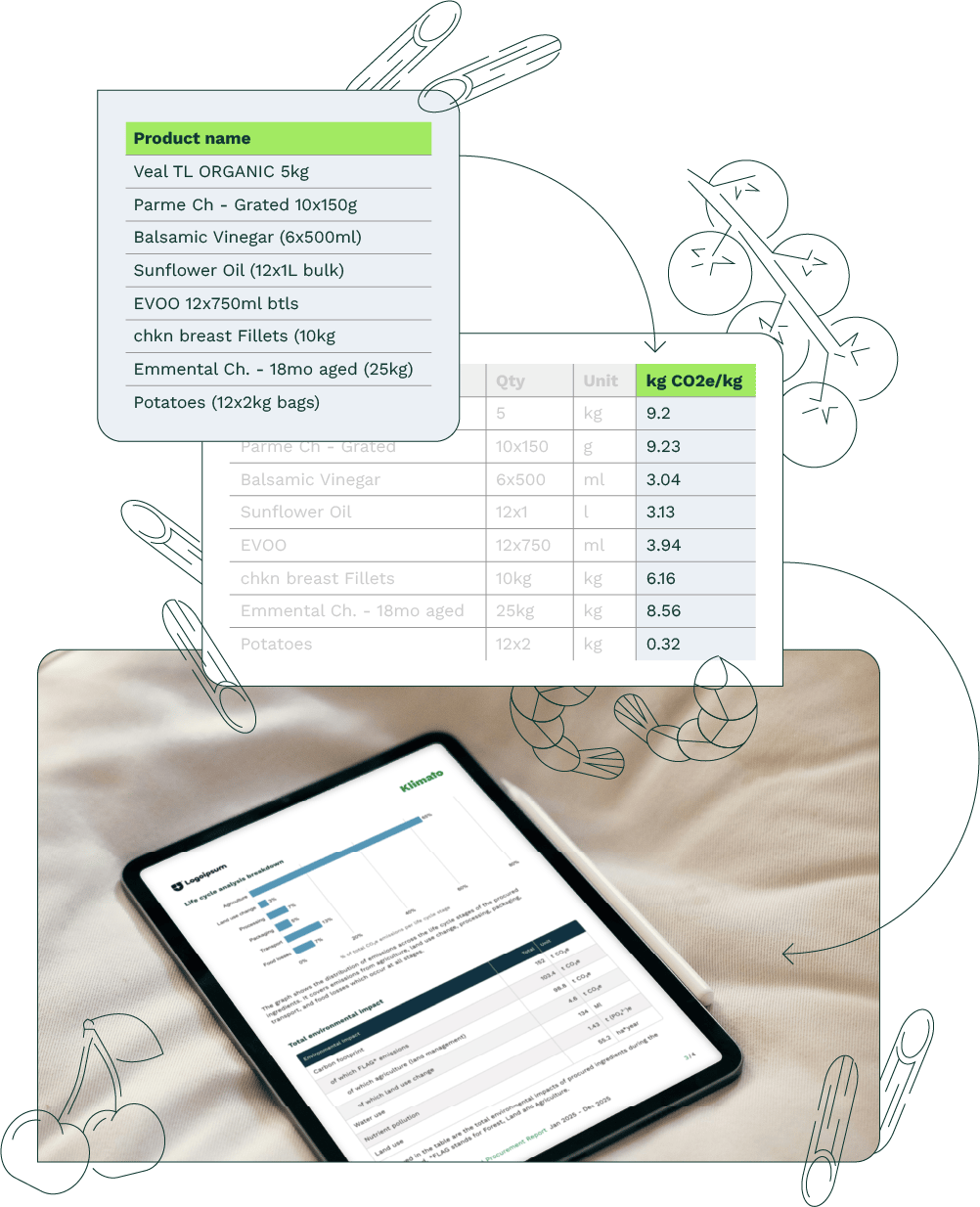
A mid-size contract caterer can have tens of thousands of SKUs across multiple sites, procurement systems, and supplier relationships. Mapping that data to emissions factors manually is not practical. Generic carbon accounting tools apply spend-based estimates that hide hotspots and produce numbers too imprecise to act on or defend to auditors.

Icons-small_lychee-lime_building

Reporting Requirements Are Coming From Multiple Directions at Once

CSRD obligations, client sustainability requirements, SBTi commitments, and tender criteria are all converging. Each has slightly different data needs. Organizations that build one rigorous, well-structured emissions data foundation—rather than producing separate estimates for each request—are better positioned to meet all of them.

Klimato Carbon Accounting

Confidence Across
Scope 1, 2, and 3

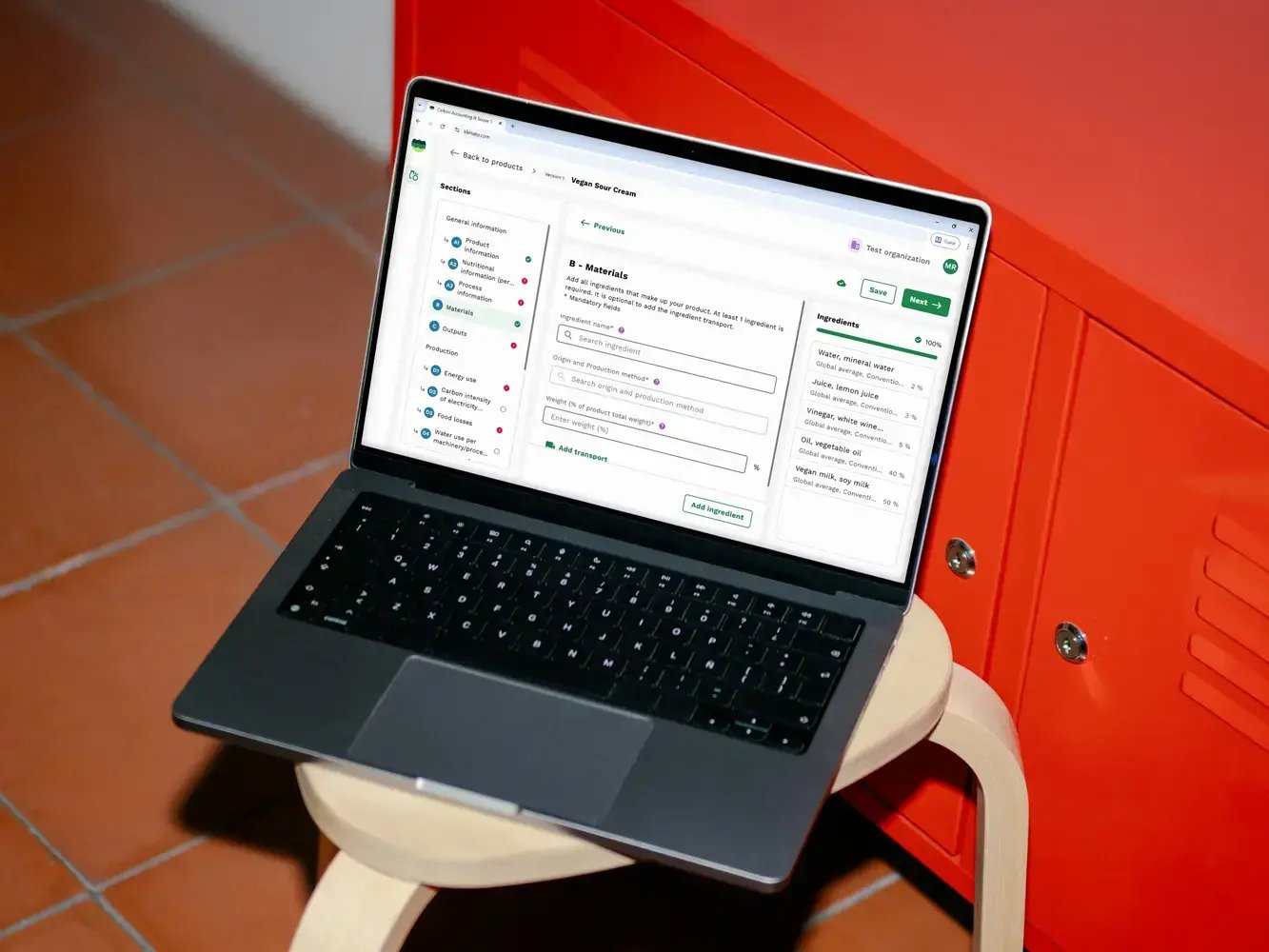
Klimato Carbon Accounting is the primary reporting solution for contract caterers navigating CSRD, SBTi, and stakeholder disclosure requirements. It takes your existing procurement and operational data and produces structured Scope 1–3 emissions reporting that is audit-ready, GHG Protocol-aligned, and built for the data complexity of food operations.

2026_Mockup-laptop-5_PCF-vegan-sour-cream_materials_1333x1000px
Making the Case Internally

What Klimato Gives Every Stakeholder

Sustainability professionals at contract caterers often face the same challenge: translating emissions data into terms that resonate
with procurement, finance, operations, and clients. Klimato is designed to produce outputs that work across all of those conversations.

For Sustainability and ESG Teams

Audit-Ready Data You Can Stand Behind

  • Traceable methodology aligned with GHG Protocol and CSRD

  • Structured reports ready for external verification

  • Progress tracking against climate targets over time

  • Supported frameworks: CSRD/ESRS, GRI, SBTi, TCFD, CDP

For Procurement Teams

Hotspot Data That Makes Sourcing Decisions Specific

  • Category and ingredient-level emissions breakdown

  • Supplier comparison by emissions intensity

  • FLAG data covering land use and agricultural impact

  • Insights that connect procurement choices to carbon outcomes

For Leadership and Clients

Numbers That Hold Up Under Tender Scrutiny

  • Dashboard view of Scope 1, 2, and 3 progress

  • Exportable reports for board-level review

  • Verified data to support tender and client submissions

  • Evidence of progress, not just commitment

F&B Emissions Hotspot Report

Where Catering's Highest Food Emissions Are Concentrated

A free data report from Klimato's customer base showing which ingredient categories drive the most Scope 3 Category 1 emissions, and what it takes to measure them accurately at scale.

✔ Based on real procurement data, not estimates
✔ Free download, no commitment
✔ Yours to keep

Where Should We Send Your Report?

Klimato is Used & Trusted by

Leading Contract Caterers Worldwide

Catering organizations from single-site operators to global contract catering companies use Klimato to build credible Scope reporting, meet client sustainability requirements, and make procurement decisions that reduce real emissions.

  • The climate impact insights that Klimato provides are becoming more important by the day, and the food I can cook with their help will be dominant in the future. Sodexo as a large company can influence many people to eat better, and we must take these steps together to contribute to a better future.

    Oscar Jonasson

    Executive Chef at Restaurant Björken, Sodexo Cytiva

    oscar jonasson
  • By working with Klimato and encouraging and educating clients to make conscious choices when they are with us, we’re bringing a huge new dynamic to the way we cater for events that can only have a bigger, positive impact for all.

    David Connell

    Director of Operations at Exclusive Collection

    David Connell, Director of Operations, Exclusive Collection
  • We're at the forefront of everything to do with sustainability. Our customers could easily buy food from shops in Helsingborg before boarding our ferries, so we (and our food) have to stand out.

    Alexander Gerencser

    Head of Food & Beverage at ForSea

    Alexander Gerencser, Head of Food & Beverage at ForSea
  • Using Klimato, we have reduced our emissions from the dishes we serve, and we are proud that all of our salads and wraps have a carbon footprint of less than 0.5kg CO2e.

    Ane Nordskar

    COO at LETT

    ane-nordskar
  • As a huge company with global scale, we need to lead the way with sustainability, because if we don't make changes, who will? So it's important to raise awareness about the climate, and it's also a business opportunity. The trend will go towards more vegetarian/flexitarian diets.

    Christian Hallemyr

    Head of Food Platform at Sodexo

    christian-hallemyr
  • We work with Klimato to help us map the carbon footprint of all the dishes we produce. We've found this extremely useful in how we plan and put our dishes together. We would highly recommend Klimato to anyone looking to reduce their carbon footprint.

    Robert Smith

    Senior Head Chef at University of Bristol

    RobertSmith
  • Our sustainability work has really taken off with the help of Klimato! Thanks to their calculation tool we have raised the awareness of our climate impact together with our restaurant guests. It's great!

    Jonathan Petersen

    Chef & Founder at Crème Filmhuset

    Jonathan Petersen
  • By displaying the carbon footprint on our menus we affirm our commitment to sustainability and are able to inform our customers about the carbon impact of their meal. With Klimato, we can effectively share carbon reports with our clients to see trends and provide data to ensure we are moving in the right direction.

    Aidan Walker

    IFS Operations Director at ISS Ireland

    Aidan Walker Portrait
Frequently Asked Questions

FAQ About Sustainability for Contract Catering

annie-spratt-80n_J7TsQX0-unsplash (1)
What does carbon reporting look like for contract caterers?

Carbon reporting for contract caterers means measuring and disclosing Scope 1, 2, and 3 emissions across operations. Scope 1 covers direct emissions from owned equipment and vehicles; Scope 2 covers purchased energy; Scope 3—by far the largest category for most caterers—covers all value chain emissions, primarily from food and beverage procurement. For a full explanation of how the three scopes work in a food operations context, see our Scope 1, 2, and 3 guide for food businesses →

Is Scope 3 reporting mandatory for contract caterers under CSRD?

Yes, for companies in CSRD scope. CSRD requires disclosure of Scope 1, 2, and 3 emissions under ESRS E1. For contract caterers, Scope 3 food emissions will almost always be material under the double materiality assessment—meaning they must be reported, not excluded. The phased implementation timeline means many large catering companies are already in scope or approaching their first reporting year. Full CSRD requirements for food businesses →


How does carbon footprinting for menus work?

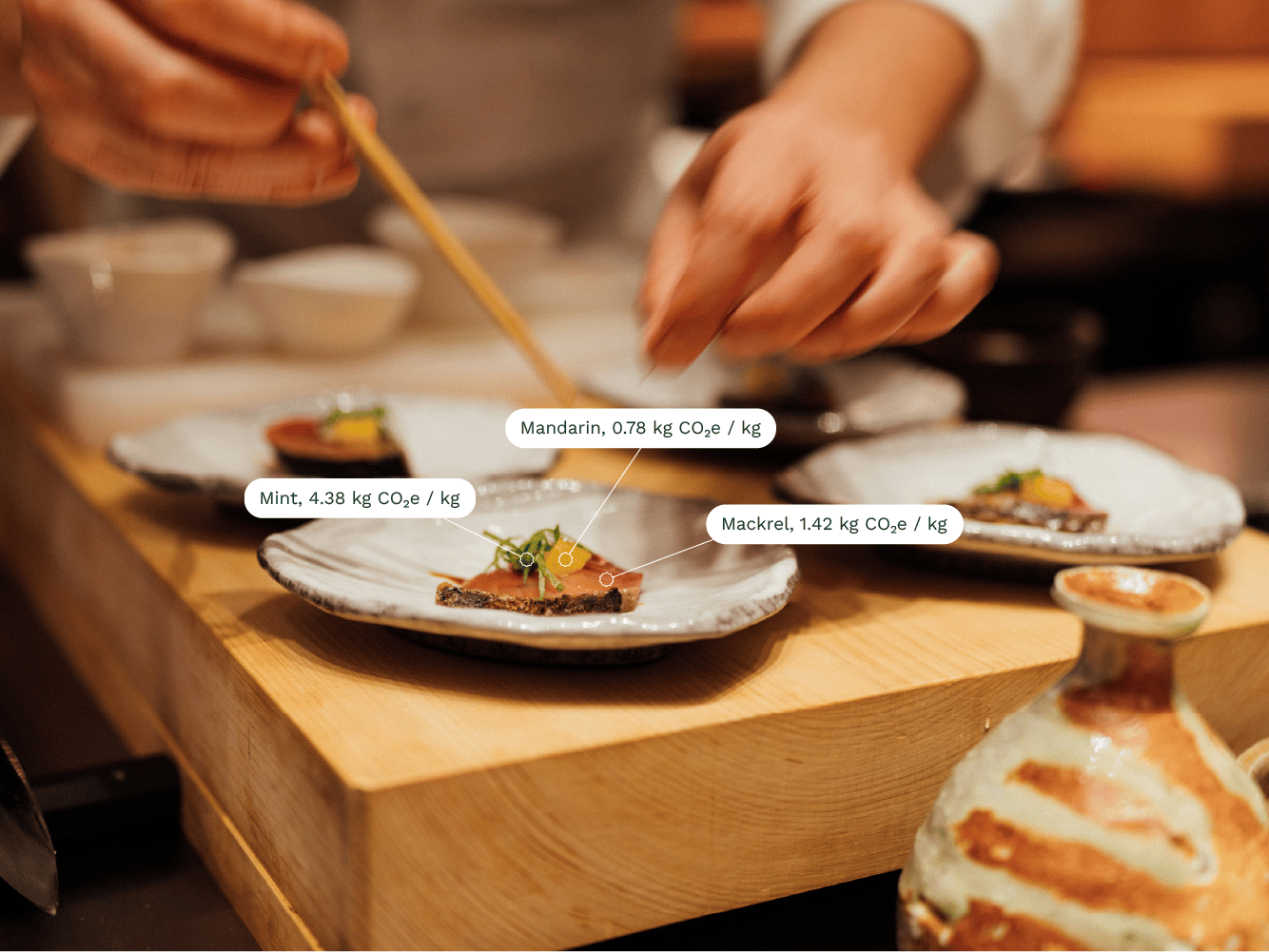
Carbon footprinting for menus means calculating the emissions impact of individual dishes, recipes, or menu ranges at ingredient level. Klimato maps each ingredient in a menu or recipe to food-specific emission factors—accounting for production method, sourcing region, and land use impact—to produce an accurate carbon footprint for what's being served. This makes it possible to identify high-impact items, compare alternatives, and connect daily kitchen decisions to corporate sustainability targets.


How does Klimato handle large, complex procurement datasets?

Klimato is built specifically for the data complexity of large food operations. Procurement data—whether uploaded as a file export or connected via integration with Millum, Apicbase, Delegate, or other platforms—is automatically cleaned, structured, and mapped to Klimato's food emissions database. This handles the scale of catering procurement, from thousands of SKUs across multiple sites, without requiring manual data preparation or internal methodology work.


What is the difference between Klimato Carbon Accounting and Klimato Food Emissions?

Klimato Carbon Accounting delivers full Scope 1, 2, and 3 corporate reporting—confidence across your entire emissions footprint, aligned with CSRD, GHG Protocol, SBTi, and GRI. Klimato Food Emissions delivers clarity on your food procurement emissions specifically—ingredient-level, activity-based data including FLAG, with the option to generate a procurement report. For most contract caterers, Klimato Carbon Accounting is the primary reporting solution, with Klimato Food Emissions providing the food-specific data layer that strengthens Scope 3 accuracy. The two products are designed to work together.

How long does implementation take?
Most catering organizations are up and running within a few weeks. Month one covers data import, sharing procurement data via file upload or connecting your procurement platform. Months one to two cover SKU mapping and emissions setup. Once complete, reporting is available immediately and updates with each new data import. Klimato's team supports every step, from data collection through to first report delivery.

 Ready to Build Credible Sustainability Reporting for Your Catering Operation?

Purpose-built for food procurement complexity. CSRD-ready. Trusted by industry leaders.