
Seamless Scope 3 Integrations Built for How You Already Work
Your existing food management systems already hold the activity data you need for Scope 3 reporting. Klimato connects directly to your recipe management and procurement—so carbon footprint data stays current, accurate, and audit-ready without manual exports or re-uploads.






Connect the Platforms You Already Use
Klimato integrates with recipe management systems and procurement platforms.
Whichever platform your team relies on, carbon footprint data flows directly into your existing workflow—no new interface to learn, no parallel data entry.
Recipe Management Systems
Procurement Systems
Open API
Find Your Match
Active Integration Partners
Klimato has established integrations with leading recipe management, procurement, and food service platforms. If your platform isn't listed, Klimato's open API makes custom connections straightforward. Talk to your Klimato contact to explore options.
Millum
Procurement
They Send Data
Delegate
Recipe Management
They Send Data
ApicBase
Recipe & Menu Management
We Collect Data
Indicater
Recipe & Menu Management
They Send Data
Kitchen CUT
Recipe & Kitchen Management
They Send Data
Parsley
Kitchen & Recipe Management
They Send Data
Food management platform for contract catering and food service operators in the US. The Parsley integration connects your ingredient and recipe data to Klimato's emissions database, making carbon footprint data available inside your existing workflow without manual exports.
Procure Wizard
Procurement
In Progress
Your System Here?
Future Potential
Make sure to let your partner know your interest in Klimato, and let us know your integration blockers. We'll take care of the rest.



Get Started
Gain Hours Back With Data You Can Trust
For large food businesses under CSRD, SBTi, or corporate net-zero commitments, Scope 3 Category 1 (Purchased Food & Beverage) typically accounts for up to 95% of total emissions, and it's the hardest category to report accurately. Every integration follows the same core process, designed to get your data mapped accurately before carbon footprints are delivered back to your platform.

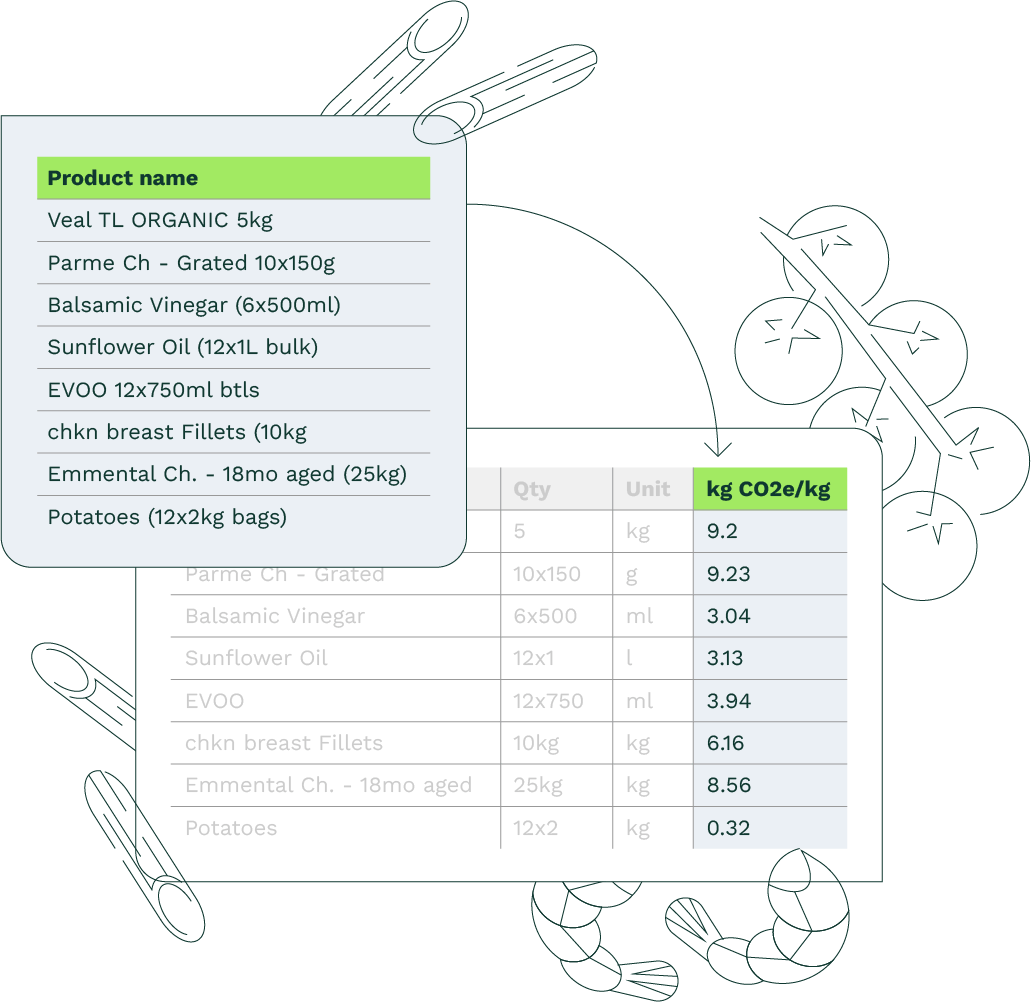
1. Product Catalog Mapping
Your system's ingredient and product catalog is mapped to Klimato's emissions database using a combination of machine learning, string similarity algorithms, and manual review by Klimato's customer success team. Every item is validated for accuracy before going live.

2. Carbon Data Delivery
Once mapping is complete, Klimato delivers emission factors and carbon footprint figures back to your platform—either through the integration partner's own systems or via the Mapping API. Your recipes, menus, and food items show accurate, up-to-date footprints without any manual data entry.

3. Ongoing Sync
As your product catalog changes and as Klimato updates its emissions database (3–4 times per year), figures stay current automatically. No re-exports, no re-uploads, no periodic manual refresh.

4. Expanded Data Points
With a synced catalog in place, you can connect additional data flows—recipes, menus, sales data, and procurement records—to build a comprehensive, activity-based picture of your food emissions.
The Difference an Integration Makes
Food businesses relying on manual CSV workflows typically spend 8–12 hours per week on data export, cleaning, and re-upload just to keep their emissions figures current. An integration eliminates that entirely.
| Without Integration |
With Klimato Integration |
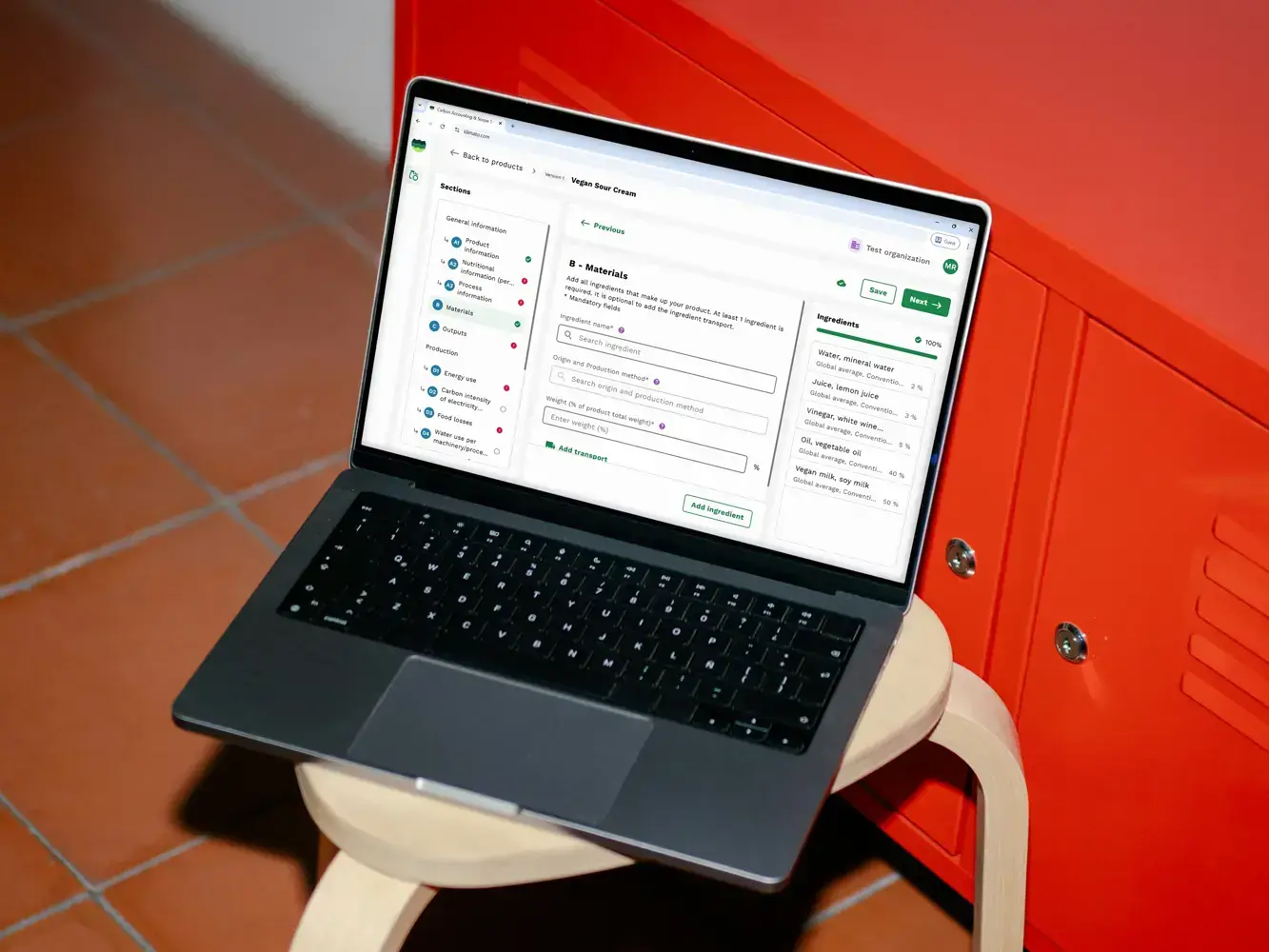
| Export ingredient and recipe data as a CSV each reporting period. | Ingredient data flows directly from your platform into Klimato, no exports required. |
| Reformat columns, fix naming, remove duplicates, align with Klimato's upload template. | Klimato's CS team maps your catalog and validates every item for accuracy. |
| Upload the cleaned file manually. | Carbon footprints update automatically as data changes in your platform. |
| Wait for calculations; flag and re-upload unmapped items. | Insights surface immediately; see which ingredients drive the most emissions. |
| Manually compile a Scope 3 report, and repeat the whole process every month or quarter. | Reports update every period as your platform data changes—no manual re-entry, ever. |
| 6 manual steps, repeated every reporting period. | Data flows automatically. Your team focuses on reduction rather than admin. |
How Integrations Can Streamline Your Climate Reporting
Klimato integrations connect seamlessly with your existing recipe management, procurement, and point-of-sale (POS) systems, ensuring that carbon footprint tracking and reporting are no longer tedious tasks.
This guide will explore the benefits of our integration products, dive into practical examples, and offer strategic advice for leveraging these tools to future-proof your business.
Where Should We Send Your Guide?
The Klimato Database
Accurate, Food-Specific Emissions Data Built for Scale
Klimato's central emissions database contains 4,000+ unique ingredients with over 20,000 variations based on country of origin and production method. Emission factors are peer-reviewed, ISO-compliant, and updated 3–4 times per year to reflect the latest science and supply chain data.
Every ingredient mapped through a Klimato integration is validated by Klimato's customer success team before going live, combining automated mapping technology with human quality assurance. This makes Klimato's approach fundamentally different from generic ESG platforms: the data is built specifically for food supply chains, not adapted from cross-industry averages.

Frequently Asked Questions
FAQ About Integrations
.jpg?width=2000&height=1348&name=annie-spratt-80n_J7TsQX0-unsplash%20(1).jpg "annie-spratt-80n_J7TsQX0-unsplash (1)")
Which platforms does Klimato integrate with?
Klimato currently has active integrations with Millum (procurement), Delegate (recipe management), Kitchen CUT (kitchen and recipe management), ApicBase (food and beverage management), Indicater (recipe and menu management), and Parsley (food management, US). An integration with Procure Wizard is in development. Klimato also offers an open API for teams that want to build custom connections to other platforms.
How long does it take to set up an integration?
Setup begins with a single conversation with your Klimato contact. From there, Klimato's customer success team handles catalog mapping and validation—the process that ensures every ingredient in your system is accurately matched to a carbon footprint before data goes live. Timeline varies depending on the size of your product catalog, but your team has no technical work to do on your side. Klimato manages the integration end to end.
Do I need technical resources to connect my platform?
No. Klimato handles the integration setup, catalog mapping, and ongoing maintenance. Your team doesn't need to write code or manage API connections. Once the integration is live, data flows automatically without any action required on your side.
How does Klimato map my ingredients to carbon footprint data?
Klimato uses a combination of machine learning, string similarity algorithms, and manual review by its customer success team to match your system's product catalog to entries in Klimato's emissions database. Every mapped item is validated for accuracy before going live. The database covers 4,000+ unique ingredients with over 20,000 variations by country of origin and production method, which means the vast majority of food service and procurement catalogs can be mapped with high coverage.
How does a Klimato integration support CSRD reporting?
CSRD requires large food businesses to report Scope 3 emissions under ESRS E1, and Scope 3 Category 1 (Purchased Food & Beverage) typically accounts for up to 95% of total emissions in food service businesses. Klimato integrations connect your actual procurement and recipe data to activity-based carbon footprint calculations—producing figures that are more accurate than spend-based estimates and that meet the audit-readiness requirements of CSRD. Businesses that integrate their platforms can report on food emissions continuously rather than compiling data manually each reporting period.
Is FLAG (Food and Land Use) emissions data available through integrations?
My platform isn't listed. Can Klimato still integrate with it?
Ready to Connect Your Food Procurement System?
Setup takes one conversation. Klimato handles catalog mapping, validation, and go-live, no technical work on your end.