
5 Easy Ways to Increase Profits While Going Green
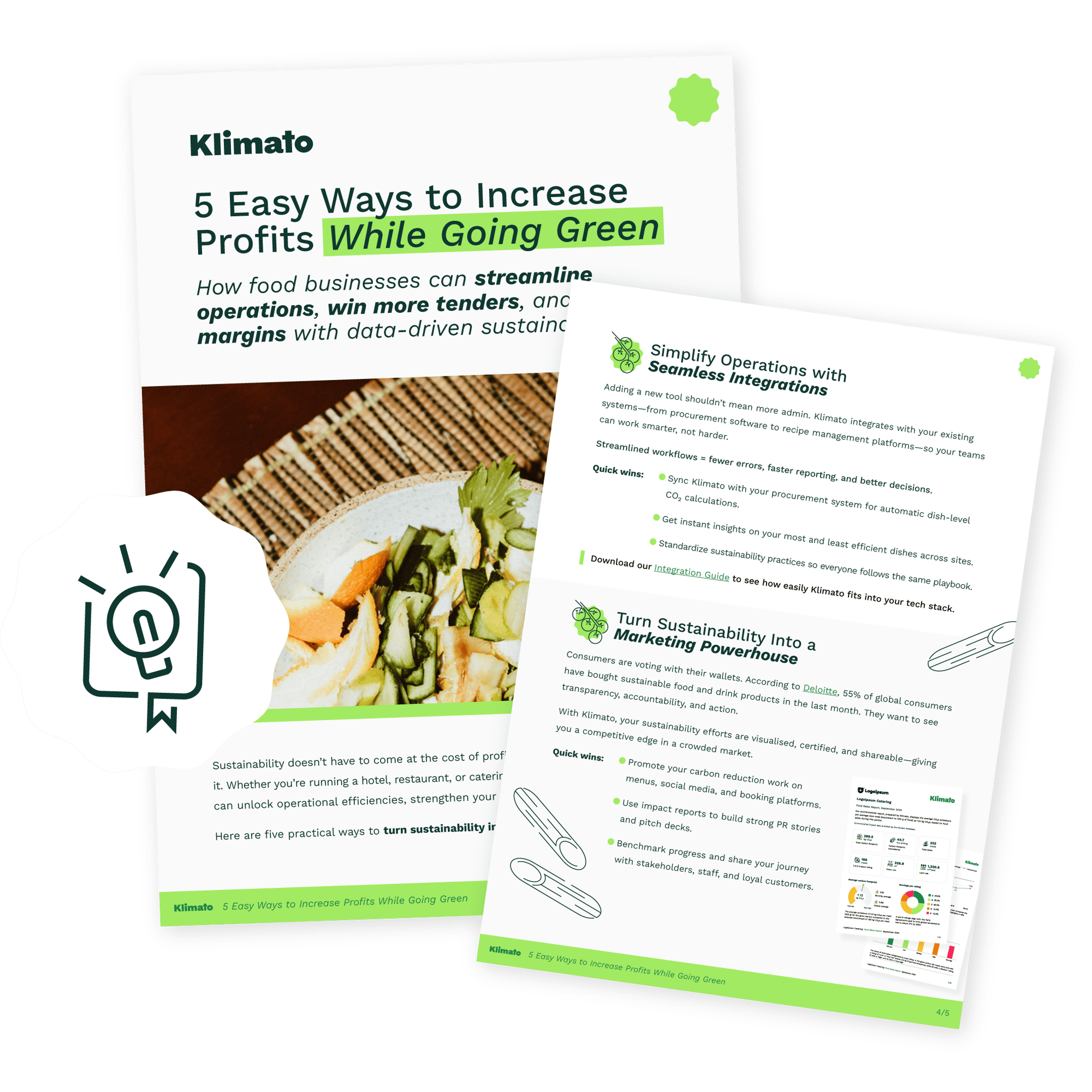
Sustainability doesn’t have to come at the cost of profit. In fact, it’s a proven way to boost it. Whether you’re running a hotel, restaurant, or catering operation, climate-smart decisions can unlock operational efficiencies, strengthen your brand, and win you more business.
Download for five practical ways to turn sustainability into a commercial advantage.
Request guide
FAQ About Going Green

Can going green actually increase profits for food businesses?
Yes—sustainability and profitability are increasingly aligned in the food and hospitality sector. Reducing high-carbon ingredients typically reduces food costs, since carbon-intensive products like beef and dairy are among the most expensive to source. At the same time, sustainability credentials attract corporate clients, win tenders, and strengthen brand loyalty. The result is a commercial advantage that compounds over time. See how sustainability practices can drive profitability in food service and how to maximize profitability in the hospitality and food industry.
What are the most effective ways for food businesses to reduce their carbon footprint?
The highest-impact changes for most food businesses involve ingredient sourcing—specifically reducing reliance on animal proteins and shifting toward seasonal, plant-forward menus. Beyond that, reducing food waste, optimising procurement, and working with suppliers on lower-carbon alternatives all contribute meaningfully. The key is having accurate dish-level carbon data to identify where the biggest gains are. Read about food carbon footprint tools, methods and impact and why most food companies struggle to reduce their emissions without the right data foundation.
How does carbon transparency help food businesses win more contracts?
Buyers—whether corporate clients, procurement teams, or event organisers—increasingly require verified sustainability data from their food suppliers. Businesses that can provide dish-level carbon footprint data and demonstrate year-on-year emissions reductions are better positioned to win tenders and retain contracts. Vague sustainability claims no longer satisfy procurement criteria. Explore how top producers drive food business growth with carbon transparency and how sustainable caterers win more contracts with less effort.
What is the ROI of investing in carbon measurement software for food businesses?
The return on investment from carbon measurement software comes from multiple directions: reduced ingredient costs from lower-carbon menu design, improved tender win rates, stronger brand positioning, and avoided compliance costs as regulations tighten. Businesses that measure accurately can also identify emissions hotspots quickly, making reductions faster and cheaper than those working from estimates. See how to maximize ROI with an accurate emissions calculator and the financial benefits of sustainable catering.
How can food businesses use sustainability as a marketing advantage?
Sustainability becomes a marketing advantage when it's backed by verifiable data rather than generic claims. Displaying carbon labels on menus, publishing emissions benchmarks, and referencing third-party validated figures in sales materials all convert internal sustainability work into external credibility. This is especially powerful in B2B contexts, where buyers are increasingly sceptical of unsubstantiated green claims. Learn how to drive food business growth with carbon labeling and reporting and how to prove your sustainability with verified data.
How do food businesses identify where their biggest carbon savings are?
Calculate for the Future, Create Data-Led Results Today
