









Scope 1–3 Carbon Accounting
Built for Food Businesses
Klimato Carbon Accounting helps sustainability managers, procurement teams, and finance leads turn existing procurement and operational data into credible Scope 1–3 emissions reporting. Structured, audit-ready, and aligned with the GHG Protocol, without creating a heavy internal workload.
Designed for Scope 1–3 Reporting in Food Operations
Food businesses face unique reporting challenges. Complex ingredient and procurement data make emissions tracking difficult with generalist tools. Klimato’s food-first approach transforms operational data into structured insights teams across procurement, sustainability, and finance can use.
Automated emissions mapping
Upload procurement or operational data and let Klimato handle emissions factor application, data validation, and reporting setup. No internal methodology building required.
Clear visibility across Scope 1, 2, and 3
Understand where emissions occur across your operations. Identify hotspots, prioritize actions, and communicate progress with clarity.
CSRD-ready
reporting outputs
Export structured data aligned with current disclosure frameworks. Support audits, leadership reviews, and voluntary reporting initiatives with confidence.
Food-specific
emission modeling
Granular emission factors built for ingredients, sourcing, and purchasing complexity. Insights reflect how food businesses actually operate.
Expert-led onboarding AND SUPPORT
From data collection to reporting setup, Klimato’s team supports your journey with guidance grounded in science and real operational experience.
Why General Carbon Accounting Tools Fall Short for Food Businesses
Most carbon accounting platforms were built for generic corporate emissions, not ingredient-level complexity or large procurement datasets. Food operations require a different level of data granularity and operational context.
-
→ Generic emission models
-
→ Limited food-specific datasets
-
→ Difficult to scale across thousands of products
-
→ Insights disconnected from kitchen or procurement realities
-
✔ Built specifically for food and beverage emissions
-
✔ Handles complex ingredient and purchasing data at scale
-
✔ Traceable methodology aligned with recognized databases
-
✔ Insights that support operational decisions, not just reporting
| Capabilities |
Generalist tools |
|
| Full Scope 1-2-3 reporting | ✔ | ✔ |
| Automation and data workflows | ✔ | ✔ |
| Large dataset handling | ✔ | ✔ |
| Food-specific, accurate emission factors | △ | ✔ |
| Product-level data mapping | △ | ✔ |
| Operational insights for foodservice and hospitality businesses | △ | ✔ |
Legend: ✔ = Core capability △ = Available but not specialized
From Raw Data to Audit-Ready Reporting in Three Steps
Klimato manages the heavy lifting so your team can focus on decisions, not data wrangling.
Map Your Existing Data

Share procurement and operational data. Klimato handles emissions mapping, factor application, and setup (even if your data is incomplete).
Build Scope 1–3 Visibility

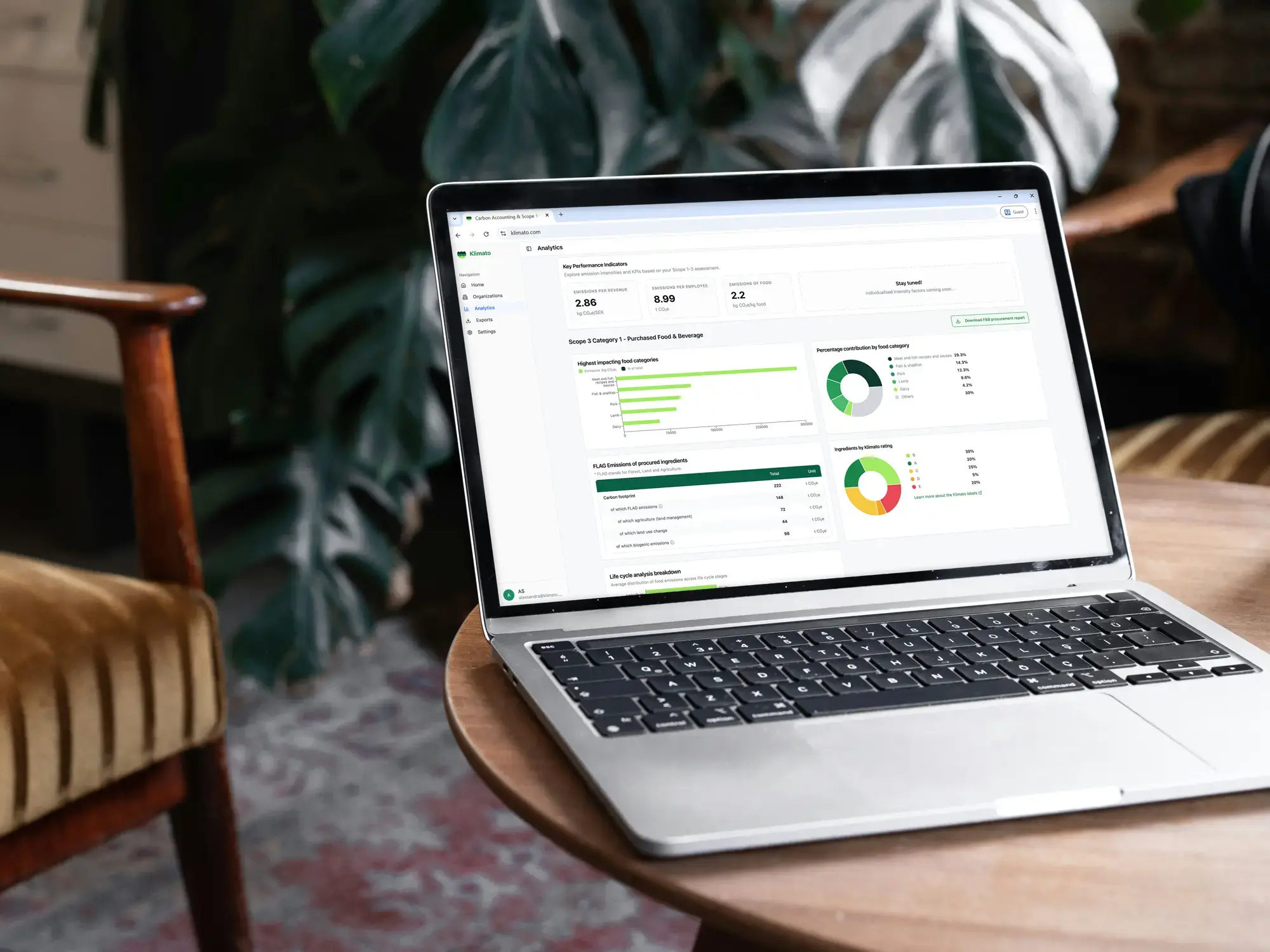
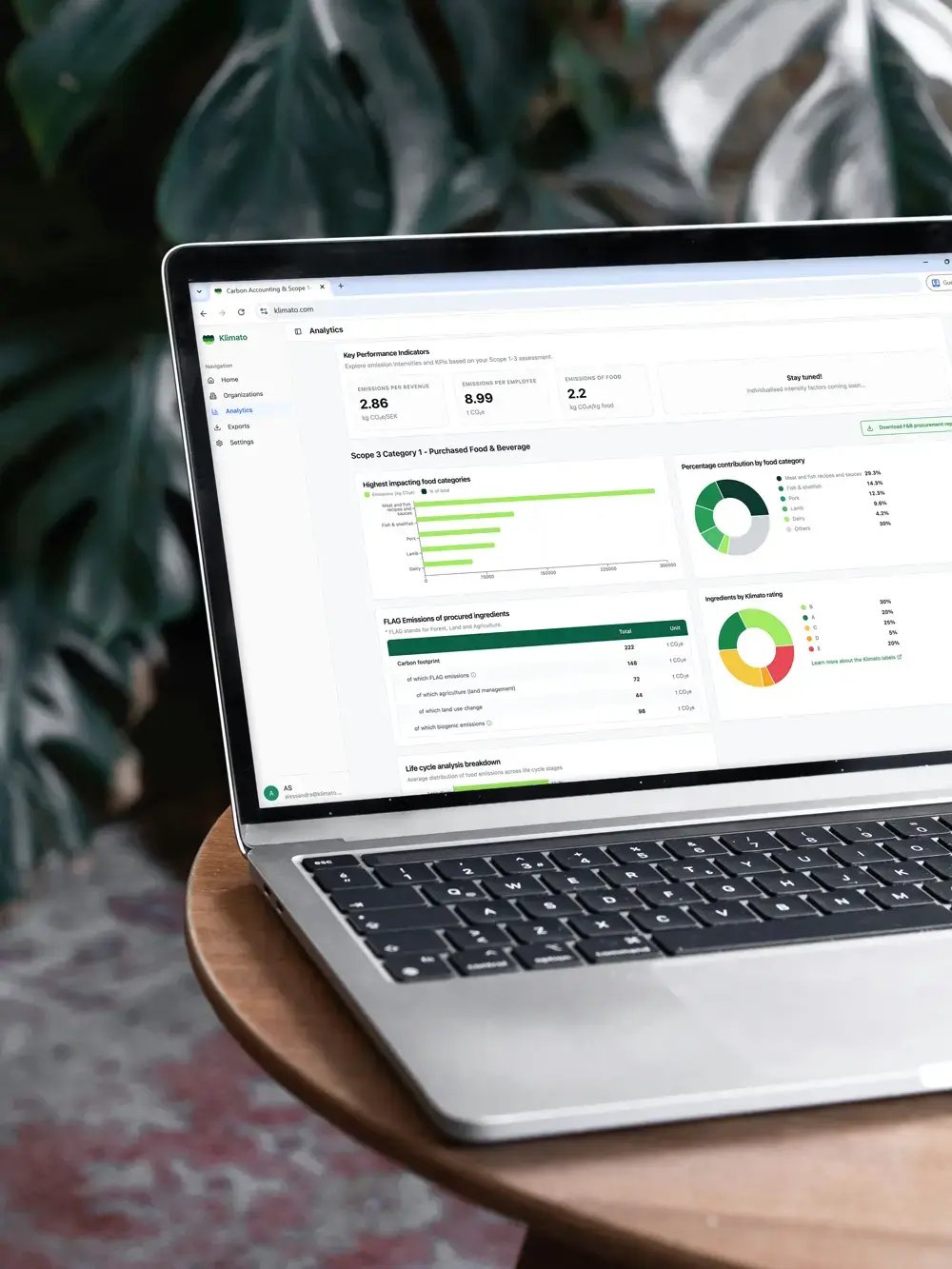
Gain structured dashboards showing emissions breakdowns, procurement hotspots, and progress toward climate targets.
Deliver Audit-Ready Reporting

Export structured reports aligned with disclosure frameworks, ready for leadership review, CSRD submissions, or external audits.
BUILT FOR VISIBILITY, REPORTING, AND REAL OPERATIONAL PROGRESS
Klimato transforms raw data into structured dashboards designed for sustainability teams, procurement leaders, and executives.
-
✔ Scope 1, 2, and 3 breakdowns
-
✔ Procurement hotspot visualization
-
✔ Progress tracking toward climate targets
-
✔ Reporting exports aligned with disclosure frameworks
Every figure remains traceable to its methodology, so your team can explain results clearly and stand behind numbers under scrutiny.
THe Outcomes That Matter
Faster rollout without heavy internal resourcing
Start with the data you already have. Klimato manages mapping, validation, and setup so your team isn't rebuilding methodology from scratch.
Defensible emissions data leadership can trust
Numbers grounded in Life Cycle Assessment sources and trusted international databases; clear, traceable, and ready for scrutiny.
Reporting that HOLDS up under scrutiny
Outputs structured for CSRD-level expectations, voluntary disclosures, and internal governance requirements.
Clear insight into where reduction efforts matter most
Move beyond reporting. Identify emissions hotspots and translate insights into priorities your procurement and operations teams can act on.
Aligned With the Frameworks That Matter
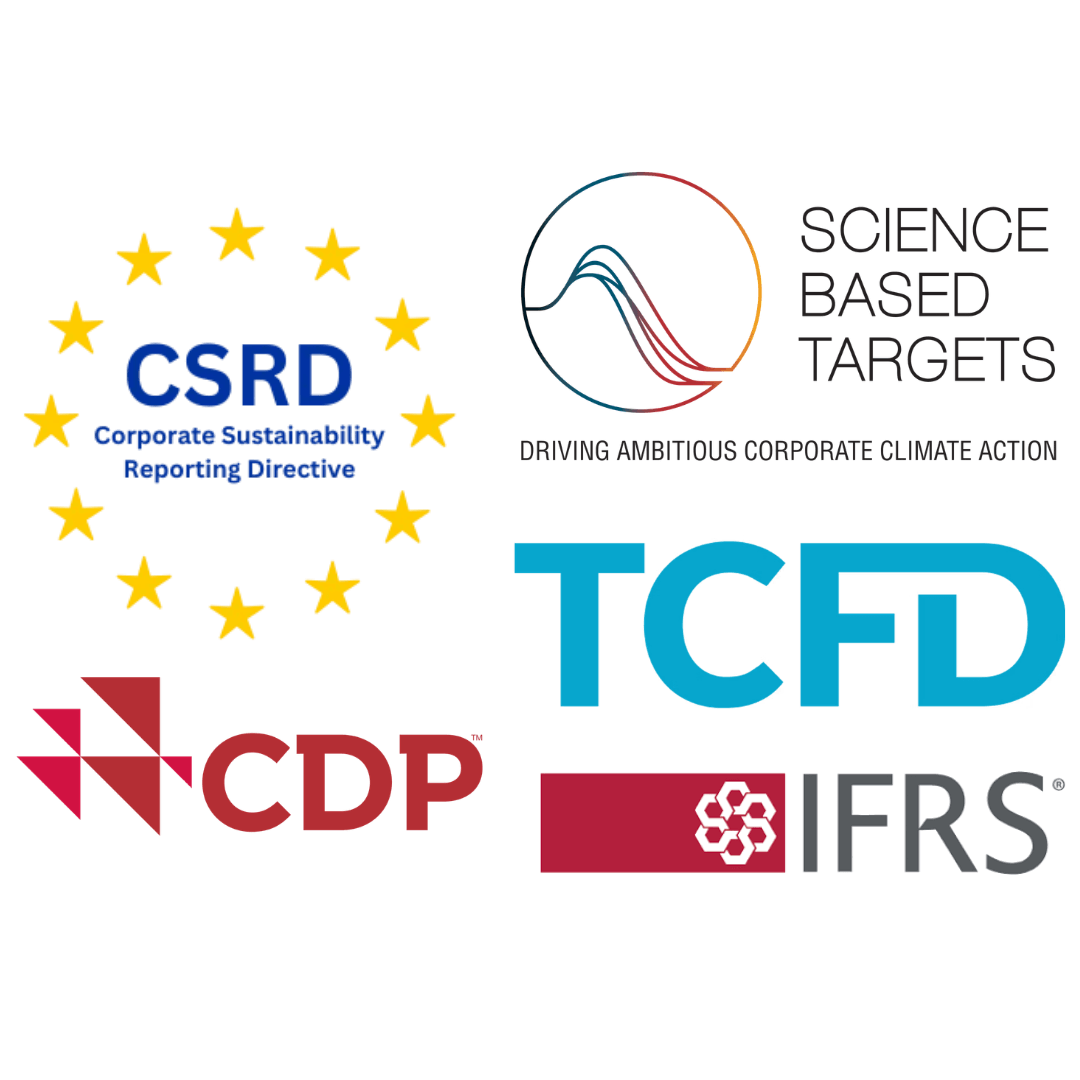
Klimato Carbon Accounting helps teams navigate complex reporting requirements by aligning emissions data with recognized international standards. Supported frameworks include CSRD/ESRS, GRI, SBTi, TCFD, IFRS Sustainability Standards, and CDP.
Klimato is a GRI Software and Tool Partner, supporting organizations working toward transparent and credible sustainability reporting.
.png?width=1080&height=1080&name=Kopia%20av%20Kopia%20av%20Kopia%20av%20Namnl%C3%B6s%20design%20(1).png)
Everything You Need to Move from Measurement to Action
Klimato Carbon Accounting comes with the support and structure to get your team reporting with confidence, without months of internal setup.
-
✔ Guided onboarding and training sessions
-
✔ Dashboard access with key metrics across all scopes
-
✔ Exportable reporting aligned with frameworks
-
✔ Ongoing expert support and reviews
✔ Carbon reduction strategy guidance
Preferred by Foodservice Leaders
Food businesses across catering, hospitality, retail, and manufacturing use Klimato to simplify
Scope 1–3 reporting and build credible climate strategies grounded in operational reality.
-
Clients are really impressed by our work with Klimato, especially for meetings and events, and in some cases, it helps us to win business deals. It also gives us a clear competitive advantage compared to other hotels in the city.

Majorie Sundström
Sales Manager at Courtyard by Marriott Stockholm -
The climate impact insights that Klimato provides are becoming more important by the day, and the food I can cook with their help will be dominant in the future. Sodexo as a large company can influence many people to eat better, and we must take these steps together to contribute to a better future.

Oscar Jonasson
Executive Chef at Restaurant Björken, Sodexo Cytiva -
I’m impressed by the user-friendliness of the app; it is very simple, clear, and precise. Composing new recipes is not too time-consuming, and monthly reporting is great to keep us updated on our progress.

Petra Rörfors
Director of Sales & Sustainability at Courtyard by Marriott -
By working with Klimato and encouraging and educating clients to make conscious choices when they are with us, we’re bringing a huge new dynamic to the way we cater for events that can only have a bigger, positive impact for all.

David Connell
Director of Operations at Exclusive Collection -
Using Klimato, we have reduced our emissions from the dishes we serve, and we are proud that all of our salads and wraps have a carbon footprint of less than 0.5kg CO2e.

Ane Nordskar
COO at LETT -
As a huge company with global scale, we need to lead the way with sustainability, because if we don't make changes, who will? So it's important to raise awareness about the climate, and it's also a business opportunity. The trend will go towards more vegetarian/flexitarian diets.

Christian Hallemyr
Head of Food Platform at Sodexo
FAQ ABOUT KLIMATO CARBON ACCOUNTING
.jpg?width=2000&height=1348&name=annie-spratt-80n_J7TsQX0-unsplash%20(1).jpg)
What is carbon accounting software?
Carbon accounting software helps organizations measure, manage, and report their greenhouse gas (GHG) emissions across Scope 1, Scope 2, and Scope 3. It centralizes emissions data, applies verified emission factors, and generates structured reporting outputs aligned with frameworks like the GHG Protocol, CSRD, GRI, or SBTi.
Klimato Carbon Accounting is built specifically for food businesses, where procurement complexity and ingredient-level data require more granular emissions modeling than most generalist tools provide.
What are Scope 1, 2, and 3 emissions?
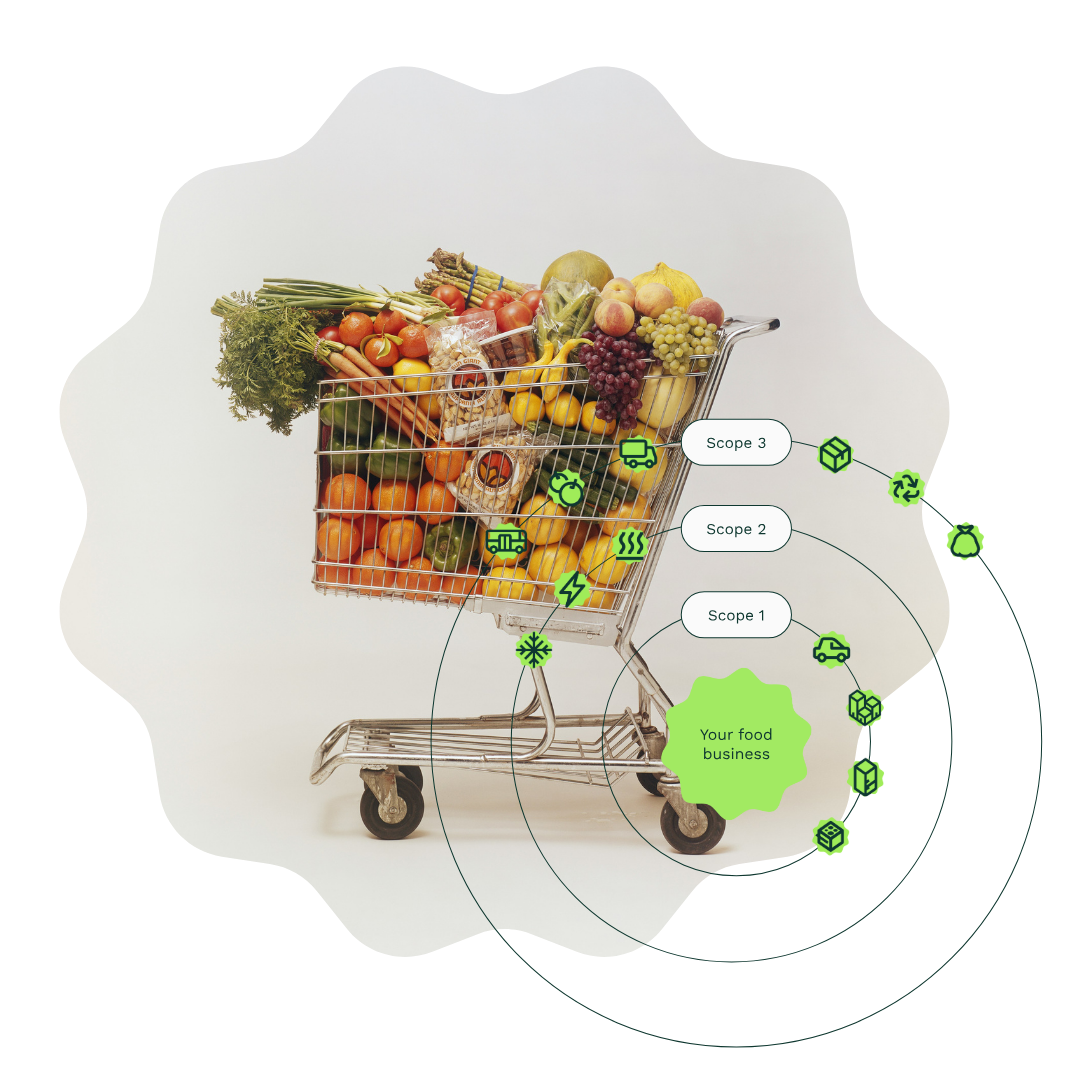
Scope 1 emissions are direct emissions from owned or controlled sources, such as fuel combustion on-site.
Scope 2 emissions come from purchased energy, such as electricity or heating.
Scope 3 emissions include indirect emissions across the value chain—and for most food businesses, this is where the majority of emissions occur, particularly from purchased ingredients and food products.
Klimato Carbon Accounting provides structured visibility across all three scopes, with a strong focus on food-related Scope 3 emissions.
Why is Scope 3 reporting especially important for food businesses?
For foodservice operators, wholesalers, hotels, and food manufacturers, most emissions typically come from purchased goods—ingredients, products, and suppliers. General carbon accounting tools often lack the food-specific data needed to model this accurately.
Klimato uses granular, food-specific emission factors and procurement mapping to provide accurate Scope 3 reporting aligned with how food operations actually function.
How does Klimato differ from general carbon accounting platforms?
Most carbon accounting software is built for broad corporate emissions reporting. These platforms often rely on high-level spend-based estimates and generic emission factors.
Klimato is purpose-built for food businesses. It handles complex ingredient data, supplier variations, and large procurement datasets at scale. The result is emissions reporting that reflects operational reality, not just financial approximations.