
Reducing Food Emissions: A Cost-Saving Guide for Hotels & Caterers
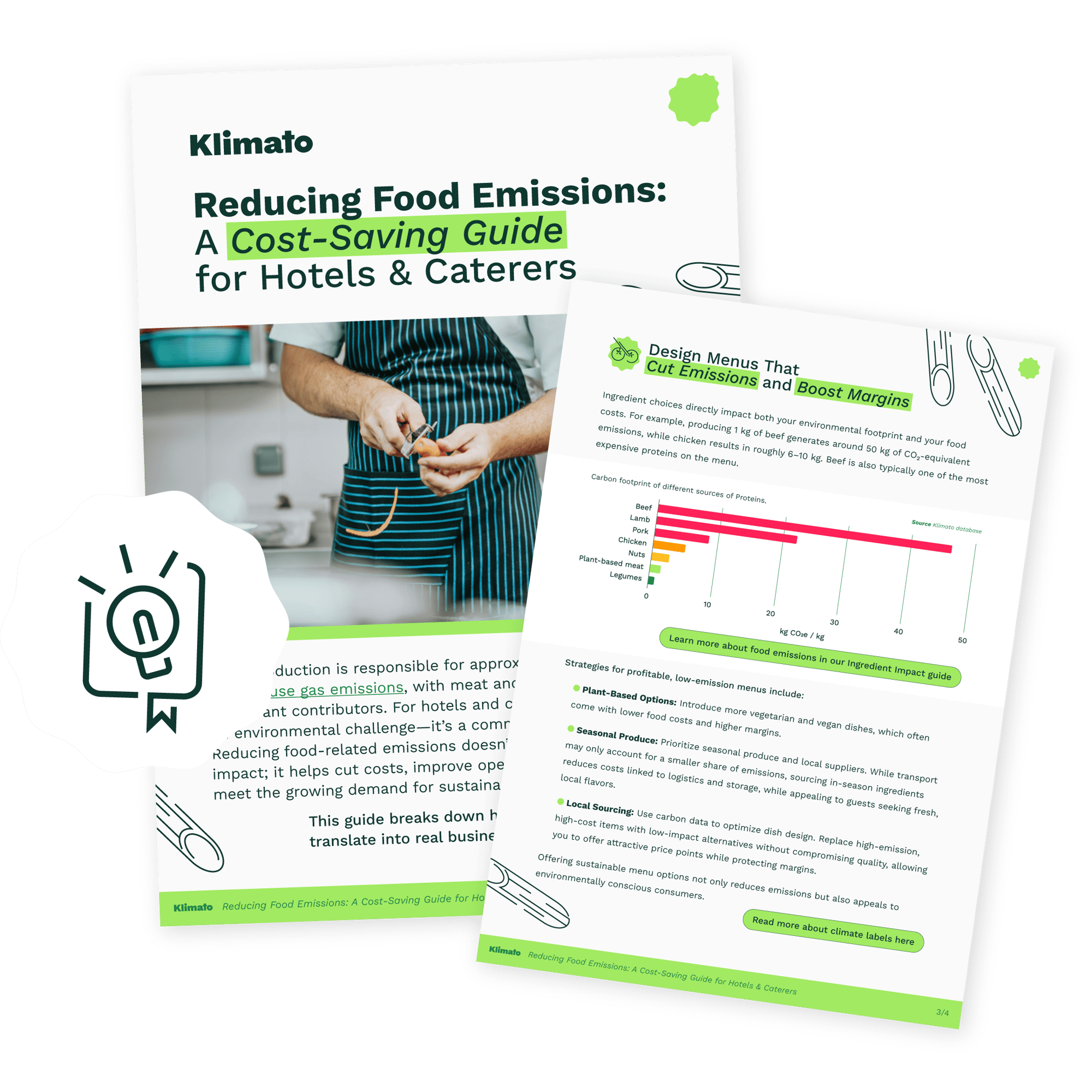
Food production is responsible for approximately 26% of global greenhouse gas emissions, with meat and dairy products being significant contributors. For hotels and caterers, this is not just an environmental challenge—it’s a commercial opportunity.
This guide breaks down how emission reduction can translate into real business value for your operation.
For a full guide to F&B emissions reporting specifically for hotels and caterers, see F&B Emissions Reporting for Hotels and Caterers.
Request guide
FAQ About Reducing Food Emissions for Cost Savings

How much of a hotel or caterer's costs are tied to high-carbon ingredients?
For most hotels and catering operations, food is one of the largest controllable cost lines, and the highest-carbon ingredients are almost always the most expensive ones. Beef, lamb, and dairy products carry both the highest CO2e per kilogram and the highest purchase cost. This means that reducing food emissions and reducing food spend are largely the same exercise. Understanding where carbon and cost overlap is the starting point for any meaningful reduction program. See how AI can help reduce your food business carbon footprint and how food carbon footprint benchmarks compare across facilities.
What is the relationship between food emissions and food cost for caterers?
Food emissions and food cost are closely correlated in catering because the supply chain inputs that drive carbon—land use, feed, water, processing—are the same inputs that drive price. A caterer that maps its menu by carbon intensity will typically find that its highest-emission dishes are also its most margin-sensitive. This makes carbon data a powerful tool for procurement decisions, not just sustainability reporting. Learn more about from field to fork: the impact of food supply chains and how to harness the power of your food supply chain with LCAs.
How can hotels and caterers reduce food emissions without raising menu prices?
The most cost-neutral approach is substitution rather than removal—replacing high-carbon, high-cost proteins with lower-carbon alternatives at a similar or better margin. Plant-forward dishes, seasonal ingredients, and locally sourced produce can all deliver comparable guest satisfaction at lower cost and lower emissions. The key is using accurate carbon data to make these decisions confidently rather than guessing. Read about sustainable food production trends and from carbon data to better food decisions.
How do food emissions reductions help caterers win corporate contracts?
Corporate clients and facilities managers are increasingly evaluating caterers on their ability to provide verified emissions data and demonstrate reductions over time. Sustainability scoring now appears routinely in tender criteria, particularly for contracts with large employers and public sector organisations. Caterers that can report accurate scope 3 food emissions—broken down by dish and category—have a material advantage in competitive bids. Explore sustainability criteria in corporate catering tenders and how sustainable caterers win more contracts with less effort.
What scope 3 reporting obligations apply to hotels and caterers?
Food procurement sits entirely within scope 3 of the GHG Protocol, meaning hotels and caterers with CSRD reporting obligations—or clients who require scope 3 disclosures—need ingredient-level carbon data to report accurately. As reporting frameworks tighten, businesses that rely on spend-based estimates rather than activity-based food data will find their figures challenged. Explore a practical guide to scope 3 reporting for food businesses and understand scope 3 data readiness requirements for food businesses.
What are the biggest emissions hotspots in hotel and catering food operations?
Across most hotel and catering menus, ruminant meat—particularly beef and lamb—accounts for a disproportionate share of total food emissions, often 50% or more of F&B carbon from a relatively small number of dishes. Dairy-heavy dishes and air-freighted ingredients are the next most significant contributors. Identifying these hotspots with accurate data allows operations to target reductions where they will have the greatest impact. Read the F&B emissions hotspot report for contract catering to see how your operation compares.
Calculate for the Future, Create Data-Led Results Today
