





BUILT FOR THE COMPLEXITY OF FOOD PROCUREMENT AT SCALE
Scope 1–3 Carbon Reporting
for Contract Caterers
Contract caterers face a reporting challenge that most carbon accounting tools weren't designed for. Your emissions don't sit primarily in owned buildings or vehicle fleets—they sit in thousands of ingredients, hundreds of suppliers, and procurement decisions made daily across multiple sites.
Regulatory requirements are making that complexity urgent. Under CSRD, Scope 3 food emissions are almost always material. Corporate clients are requiring verified emissions data from their supply chain. Tender criteria increasingly include sustainability metrics that need to be backed by credible numbers, not estimates.
Klimato is purpose-built for food businesses, handles the data complexity of large-scale catering operations, and produces Scope 1–3 reporting that holds up under audit—while giving your procurement, operations, and sustainability teams the visibility they need to act.
What's Driving Scope 3 Reporting Urgency for
Caterers Right Now
The Corporate Sustainability Reporting Directive (CSRD)
The Corporate Sustainability Reporting Directive (CSRD) requires large companies to disclose Scope 1, 2, and 3 emissions under ESRS E1. For caterers, Scope 3 food emissions will almost always be material under CSRD's double materiality assessment, meaning they cannot be excluded on the basis of complexity.
Client and corporate procurement requirements
Large corporate clients—particularly those with their own CSRD or SBTi obligations—are increasingly requesting verified Scope 3 data from their catering suppliers.
Tender criteria
Sustainability criteria in public sector and large corporate catering tenders are moving from qualitative commitments to quantitative requirements. Caterers that can present verified carbon footprinting data—at the menu or procurement level—have a demonstrable advantage over those relying on stated intentions.

THE CARBON REPORTING CHALLENGE FOR CONTRACT CATERERS
Carbon reporting in contract catering is structurally different from most other sectors. Three challenges come up consistently:
Scope 3 dominates, and
it comes from food procurement
In most catering operations, Scope 3 accounts for around 95% of total emissions. The majority of that sits in purchased food and beverages—ingredients, produce, proteins, packaged goods. Scope 1 and Scope 2 reductions matter, but they address a small fraction of total impact. The real emissions story for caterers is in what gets bought, from whom, and how.
Procurement data is large, complex, and
not emissions-ready
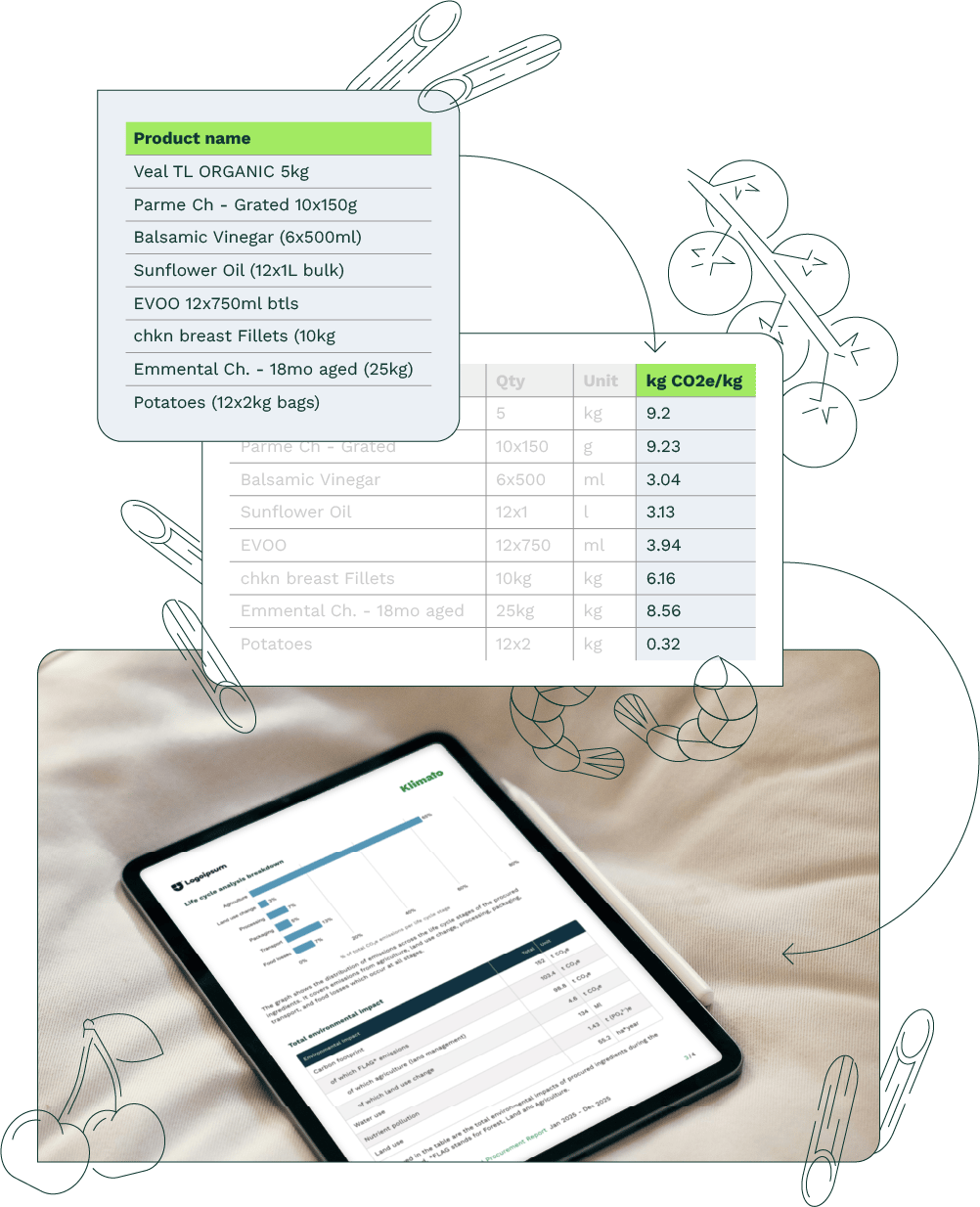
A mid-size contract caterer can have tens of thousands of SKUs across multiple sites, procurement systems, and supplier relationships. Mapping that data to emissions factors manually is not practical. Generic carbon accounting tools apply spend-based estimates that hide hotspots and produce numbers too imprecise to act on or defend to auditors.
Reporting requirements are coming from multiple directions at once
CSRD obligations, client sustainability requirements, SBTi commitments, and tender criteria are all converging. Each has slightly different data needs. Organizations that build one rigorous, well-structured emissions data foundation—rather than producing separate estimates for each request—are better positioned to meet all of them.
Why Klimato is the Trusted Partner for Sustainable Event Catering
Klimato helps catering businesses of all sizes turn climate goals into measurable action. Whether you’re launching your sustainability journey or scaling it, we make it easier to:
Hit Your Sustainability Targets
Track and report your progress using science-backed methods accredited by the World Resources Institute and Swedish Environmental Research Institute.
Attract Eco-Conscious Clients
Sustainable catering is a competitive edge. Use transparent carbon reporting to stand out in tenders and win long-term contracts.
Earn Diners’ Loyalty
More guests than ever care about sustainability in catering. Carbon-labeled menus build trust and show your values in action.
Boost Profits with Low-Emission Meals
Klimato customers see a 10% YoY growth in climate-friendly dish sales—higher-margin and better for the planet.

DELIVERING SUSTAINABLE MENUS
Built for Caterers, Trusted by Industry Leaders
Klimato was built in close collaboration with catering and venue teams. That’s why partners like Sodexo, Artizian Catering, Aspens Services, and Nordrest continue to trust us to power their sustainable event catering efforts.
Frequently Asked QUestions
What does carbon reporting look like for contract caterers?
Carbon reporting for contract caterers means measuring and disclosing Scope 1, 2, and 3 emissions across operations. Scope 1 covers direct emissions from owned equipment and vehicles; Scope 2 covers purchased energy; Scope 3—by far the largest category for most caterers—covers all value chain emissions, primarily from food and beverage procurement. For a full explanation of how the three scopes work in a food operations context, see our Scope 1, 2, and 3 guide for food businesses →
Is Scope 3 reporting mandatory for contract caterers under CSRD?
Yes, for companies in CSRD scope. CSRD requires disclosure of Scope 1, 2, and 3 emissions under ESRS E1. For contract caterers, Scope 3 food emissions will almost always be material under the double materiality assessment—meaning they must be reported, not excluded. The phased implementation timeline means many large catering companies are already in scope or approaching their first reporting year. Full CSRD requirements for food businesses →
How does carbon footprinting for menus work?
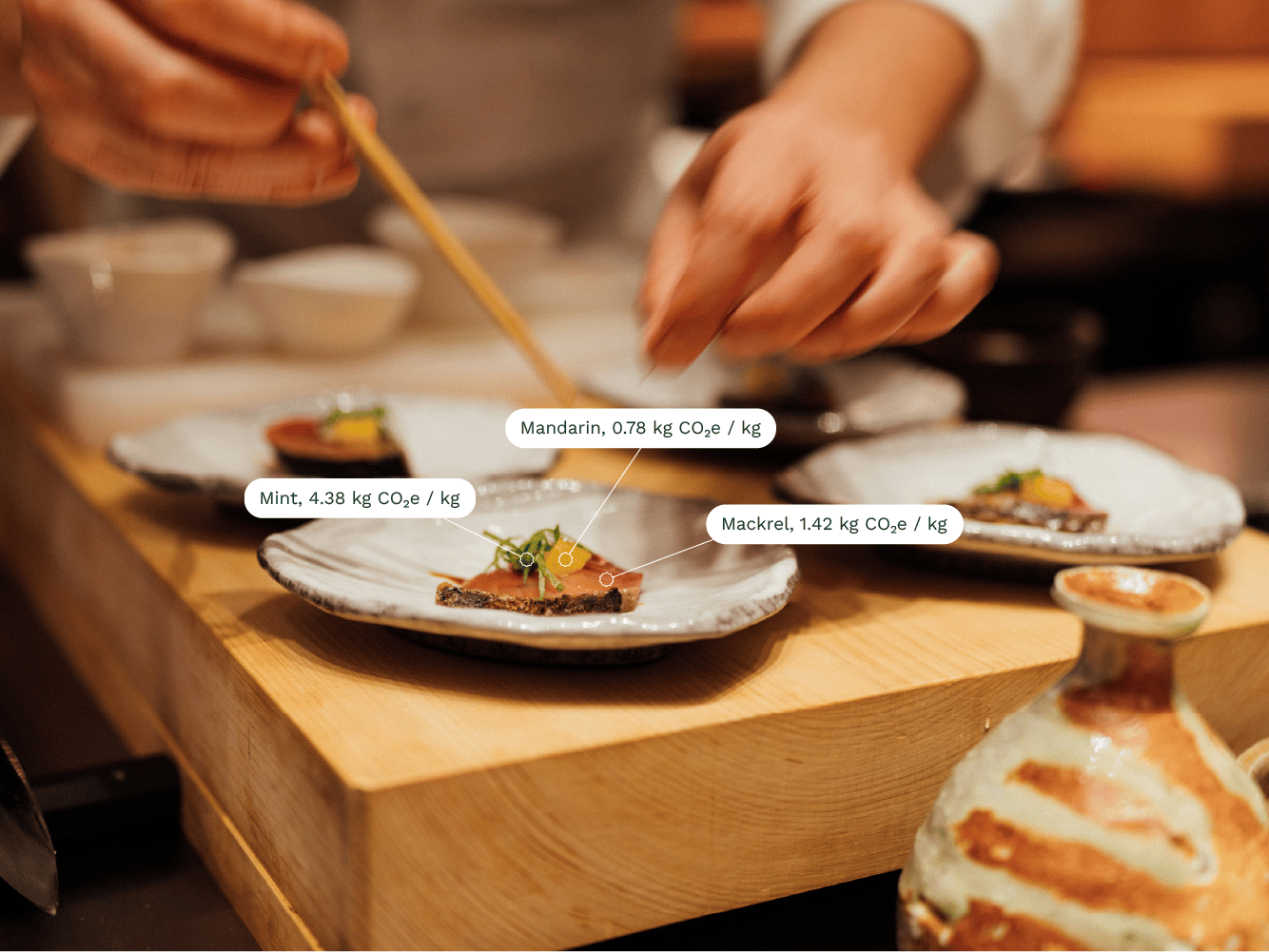
Carbon footprinting for menus means calculating the emissions impact of individual dishes, recipes, or menu ranges at ingredient level. Klimato maps each ingredient in a menu or recipe to food-specific emission factors—accounting for production method, sourcing region, and land use impact—to produce an accurate carbon footprint for what's being served. This makes it possible to identify high-impact items, compare alternatives, and connect daily kitchen decisions to corporate sustainability targets.
How does Klimato handle large, complex procurement datasets?
Klimato is built specifically for the data complexity of large food operations. Procurement data—whether uploaded as a file export or connected via integration with Millum, Apicbase, Delegate, or other platforms—is automatically cleaned, structured, and mapped to Klimato's food emissions database. This handles the scale of catering procurement, from thousands of SKUs across multiple sites, without requiring manual data preparation or internal methodology work.
How long does implementation take?
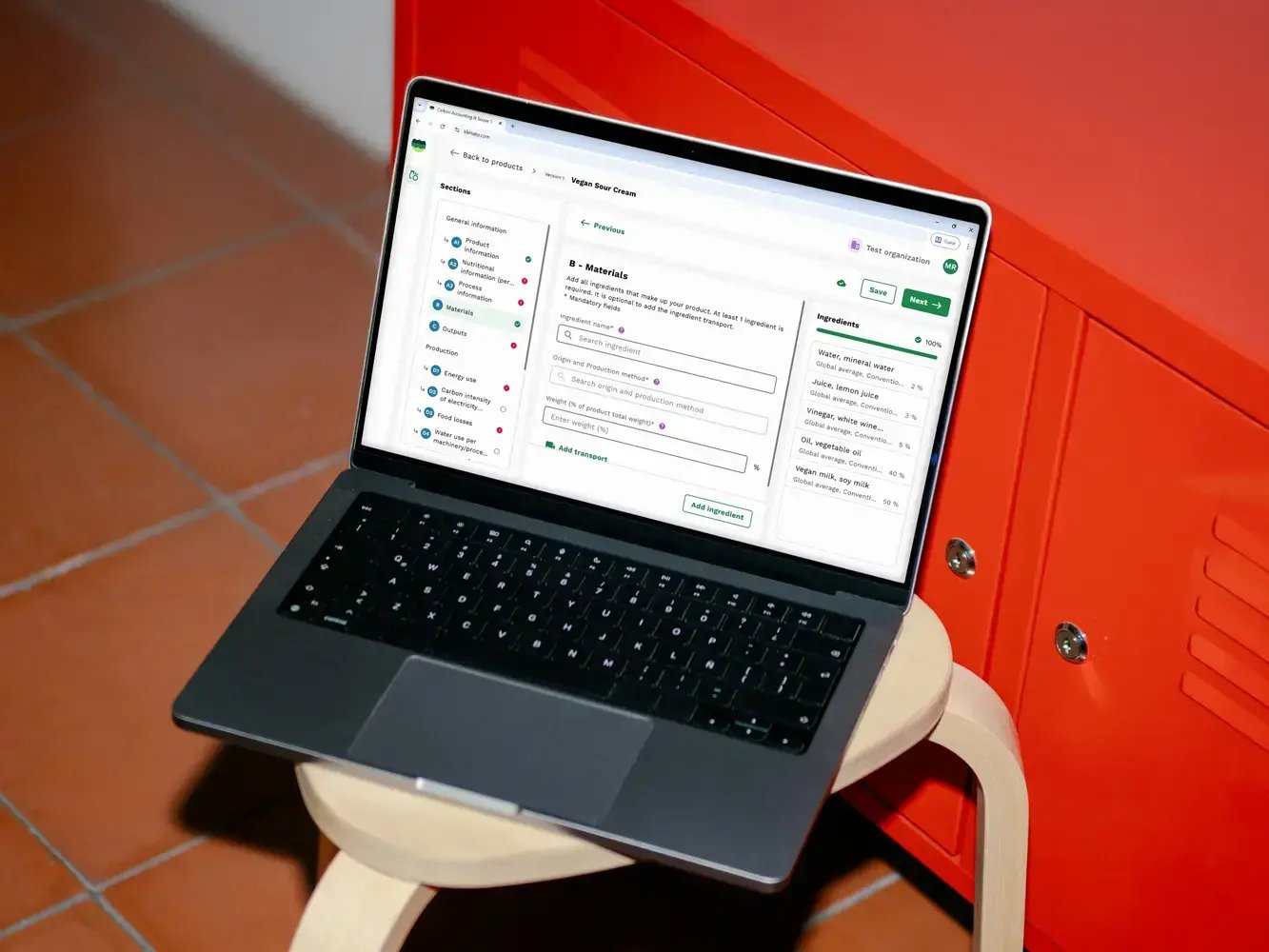
Most catering organizations are up and running within a few weeks. Month one covers data import—sharing procurement data via file upload or connecting your procurement platform. Months one to two cover SKU mapping and emissions setup. Once complete, reporting is available immediately and updates with each new data import. Klimato's team supports every step, from data collection through to first report delivery.
Can Klimato support multiple sites or brands?
Yes. Klimato is built for the multi-site and multi-brand complexity of contract catering operations. Procurement and operational data can be consolidated across sites, giving sustainability teams a single view of Scope 1–3 performance and the ability to compare emissions across locations, brands, or business units.
What is the difference between Klimato Carbon Accounting and Klimato Food Emissions?
Klimato Carbon Accounting delivers full Scope 1, 2, and 3 corporate reporting confidence across your entire emissions footprint, aligned with CSRD, GHG Protocol, SBTi, and GRI. Klimato Food Emissions delivers clarity on your food procurement emissions specifically—ingredient-level, activity-based data including FLAG, with the option to generate a procurement report.
For most contract caterers, Klimato Carbon Accounting is the primary reporting solution, with Klimato Food Emissions providing the food-specific data layer that strengthens Scope 3 accuracy. The two products are designed to work together.