
5 Ways to Maximize ROI with Climate Labeling
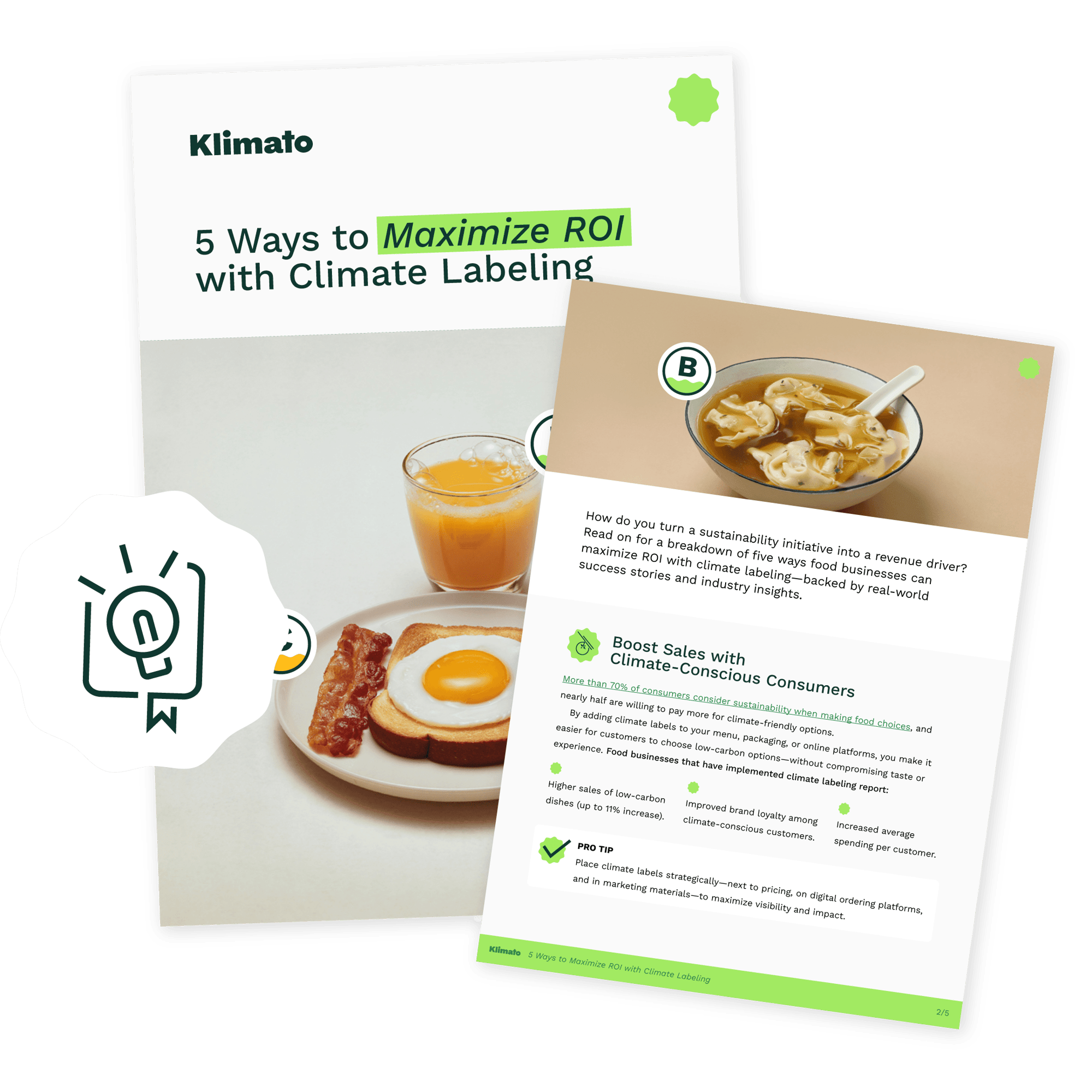
How do you turn a sustainability initiative into a revenue driver? Read on for a breakdown of five ways food businesses can maximize ROI with climate labeling—backed by real-world success stories and industry insights.
Request guide
FAQ About Maximizing ROI With Climate Labeling

What is the ROI of climate labeling for food businesses?
The return on investment from climate labeling comes from several compounding sources: lower ingredient costs through lower-carbon menu design, stronger performance in sustainability-weighted tenders, increased customer trust and loyalty, and reduced compliance costs as regulations tighten. Businesses that treat climate labeling as a revenue strategy—rather than a reporting obligation—consistently see the strongest commercial returns. Explore how food producers use carbon footprint calculation to grow revenue and how to maximize profitability in the hospitality and food industry.
How does climate labeling help food businesses increase revenue?
Climate labeling increases revenue by attracting sustainability-conscious customers, strengthening brand positioning, and opening doors to corporate and institutional clients who require verified emissions data from their suppliers. It also supports premium pricing—consumers increasingly associate transparent sustainability credentials with quality. Businesses that publish carbon labels are better placed to win new contracts, retain existing clients, and justify higher price points. Read about how top producers drive food business growth with carbon transparency and how restaurants can turn sustainability into a competitive advantage.
Does climate labeling actually change what customers order?
Yes. Research consistently shows that displaying carbon labels influences purchasing behavior, shifting demand toward lower-carbon options without reducing overall spend. The effect is strongest when labels are framed positively, highlighting climate-friendly choices rather than penalizing high-carbon ones. For food businesses, this shift is commercially valuable: lower-carbon dishes are typically lower-cost to produce, meaning a move in demand improves both margins and emissions simultaneously. See how carbon labels change customer behavior in the food industry and green menu makeover: how to boost your sales with climate labeling.
How can food producers use climate labeling to win more business from buyers?
Food producers that label their products with verified carbon footprint data give retail and foodservice buyers the information they need to meet their own scope 3 reporting requirements. This makes carbon-labeled products significantly easier to list and retain—buyers increasingly prefer suppliers who reduce the burden of downstream emissions reporting. Climate labeling therefore functions as a direct commercial differentiator in B2B sales. Explore 5 sustainability strategies for food producers to win buyers and how sustainable food production trends are reshaping buyer expectations.
What makes climate labeling credible enough to use in marketing and sales?
Credibility requires that carbon labels are based on verified, peer-reviewed lifecycle assessment data—not internal estimates or spend-based approximations. Labels should reference a recognised methodology and, ideally, carry third-party validation. Businesses that meet this bar can use their climate labels in sales materials, tender responses, and public communications with confidence. Those that cannot are exposed to greenwashing risk. Read what credible food climate data looks like and how to prove your sustainability with verified data.
How does climate labeling support scope 3 reporting for food businesses?
Calculate for the Future, Create Data-Led Results Today
