
Science & Data
Your Source of Truth for Scope 3 Food Carbon Data
Regulations are tightening. Our science-backed methodology was built for that. At the core of Klimato is the Klimato database, built for credible carbon accounting across scope 1-3, with particular strength in scope 3 category 1 and product carbon footprints (PCF).
Explore the standards, methodology, and regulatory shifts behind Klimato's data, and what they mean for your reporting.
Dig Deeper Into Food Carbon Standards
Klimato Database Methodology
Methodology
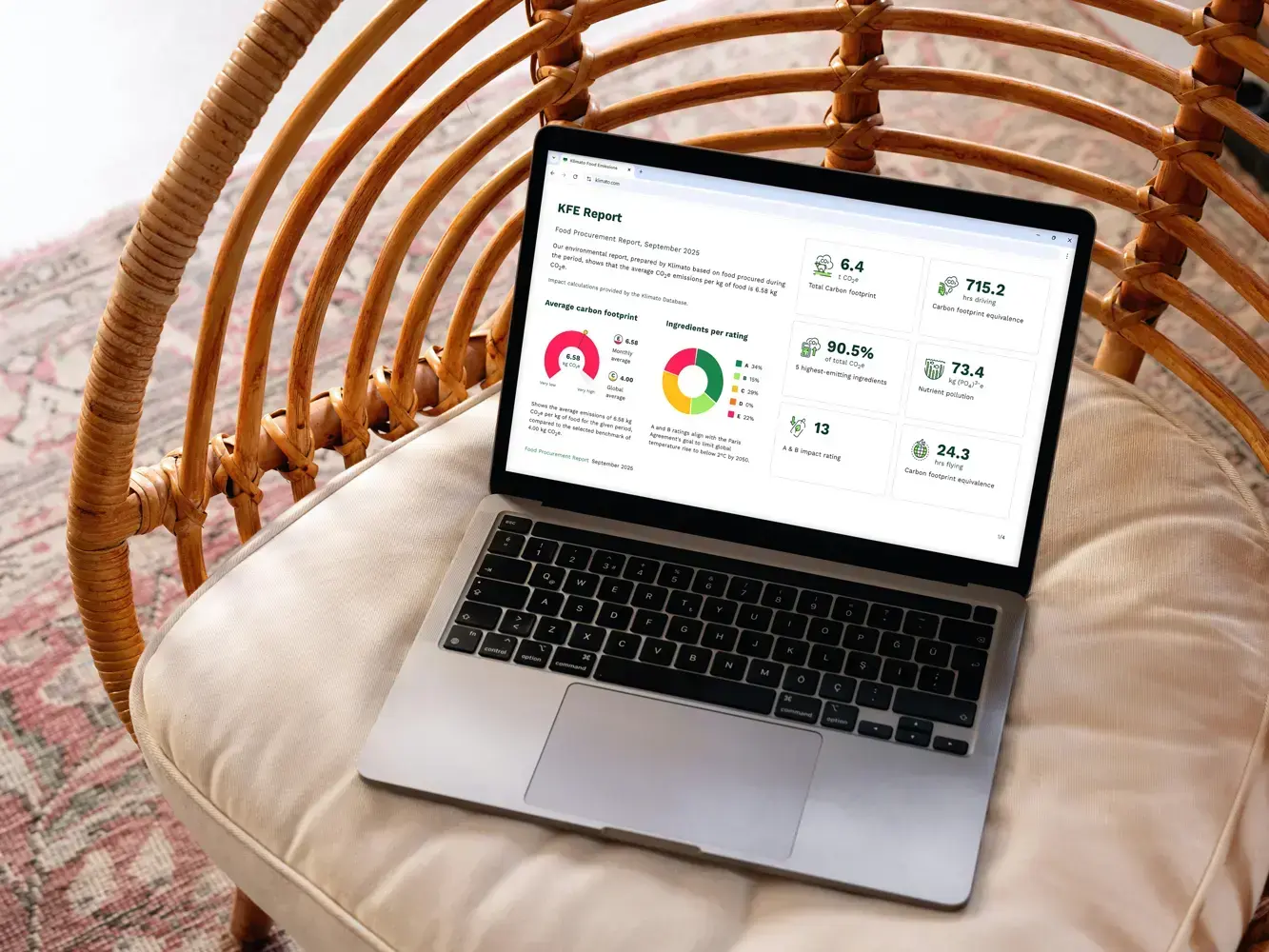
Klimato’s database enables food businesses to quantify and reduce their climate impact.
Klimato Carbon Labeling Methodology

Methodology
The foundation of our five-tiered system is rooted in the latest climate science.
The EmpCo Directive

Technical Guidance
The Land Sector and Removals Standard (LSRS)
Technical Guidance
A guide to the GHG Protocol’s first global standard for land emissions and CO₂ removals, the data it requires, and how Klimato’s methodology and database are evolving to match it.
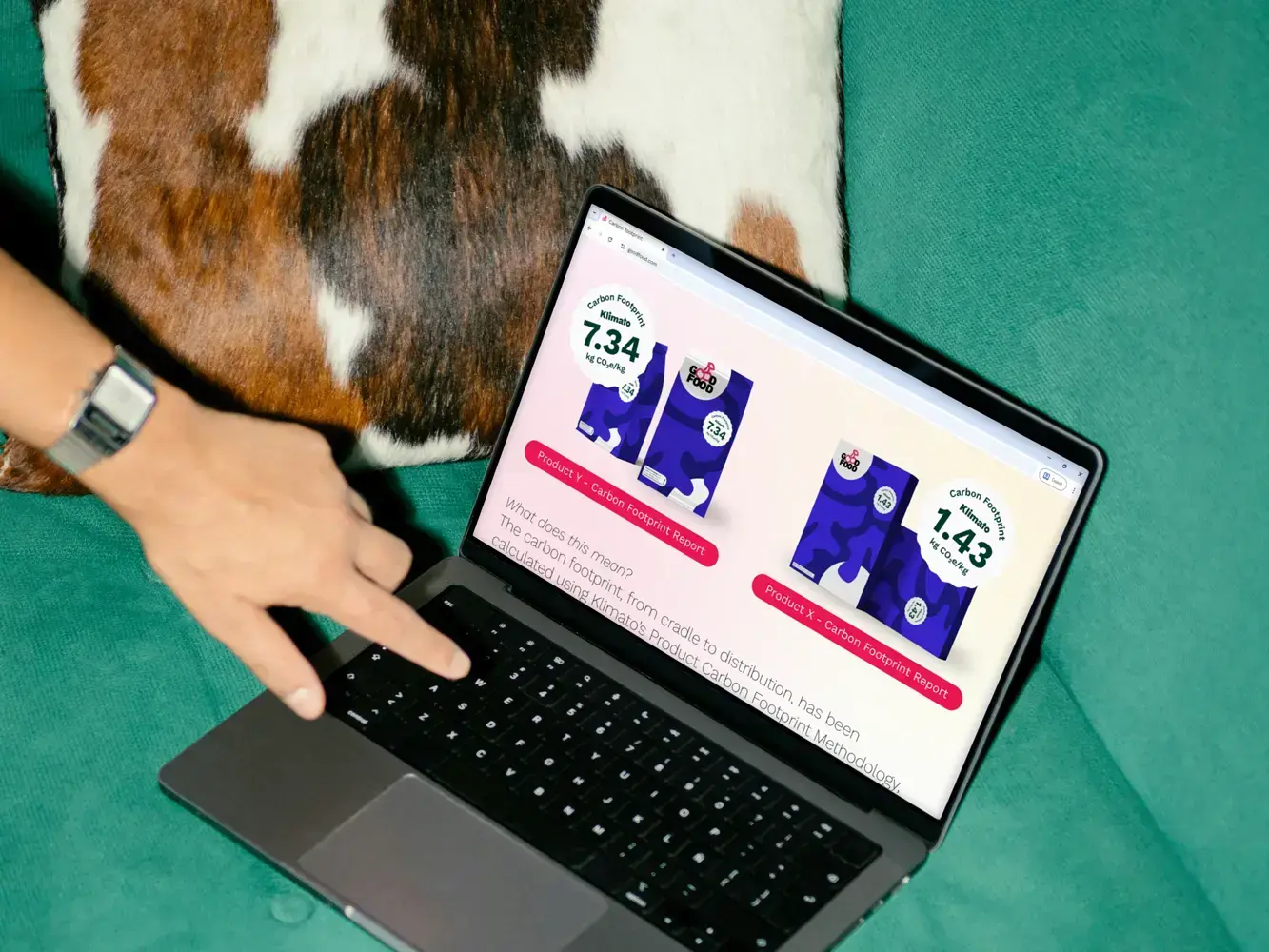
Product Carbon Footprint Methodology
Methodology
A Complete Guide to Scope 1, 2, and 3 Emissions

Guide
Understand where your emissions come from, and why Scope 3 dominates in foodservice.
Ensuring Accuracy Through Scientific Partnerships
with Trusted Institutions
We collaborate with trusted research institutions to ensure our methodology stays rigorous, transparent, and aligned with international standards.
These collaborations guarantee that Klimato’s emissions data remains credible, consistent, and compliant with the GHG Protocol and CSRD data requirements.
Frequently Asked Questions
FAQ About the Science Behind Klimato

What is Scope 3 Category 1 in the food and beverage sector?
How do food and beverage companies calculate Scope 3 emissions?
Most food companies calculate Scope 3 emissions using procurement-based data from procurement systems.
Which carbon accounting software is best for food and beverage companies?
Food and beverage companies benefit from carbon accounting tools that specialize in Scope 3 Category 1 food emissions, support full Scope 1–3 coverage, and provide expert guidance. Klimato is purpose-built for food supply chains and procurement-based accounting.
Why do food and beverage companies choose Klimato?
Food and beverage companies choose Klimato for its deep expertise in Scope 3 Category 1 (Purchased Goods & Services), food-specific emissions data, proven ability to handle complex procurement data, and combination of software and expert support.
Is Klimato compliant with CSRD and SBTi requirements?
Yes. Klimato supports CSRD-compliant carbon accounting and SBTi-aligned target setting, as well as disclosures under GRI and VSME.
How is Klimato different from generic Scope 3 tools?
Can Klimato work alongside our existing carbon accounting platform?
How do Klimato collaborate with Trusted Institutions
We collaborate with trusted research institutions to ensure our methodology stays rigorous, transparent, and aligned with international standards.
-
The Klimato Database is third-party reviewed by the Swedish Environmental Research Institute (IVL) and the World Resources Institute (WRI)’s Coolfood initiative. The latter has also reviewed the Klimato Carbon Labeling Methodology.
-
We’re a licensed software and tools partner of the Global Reporting Initiative (GRI), ensuring full alignment with the GRI Standards for Scope 1-3 reporting.
-
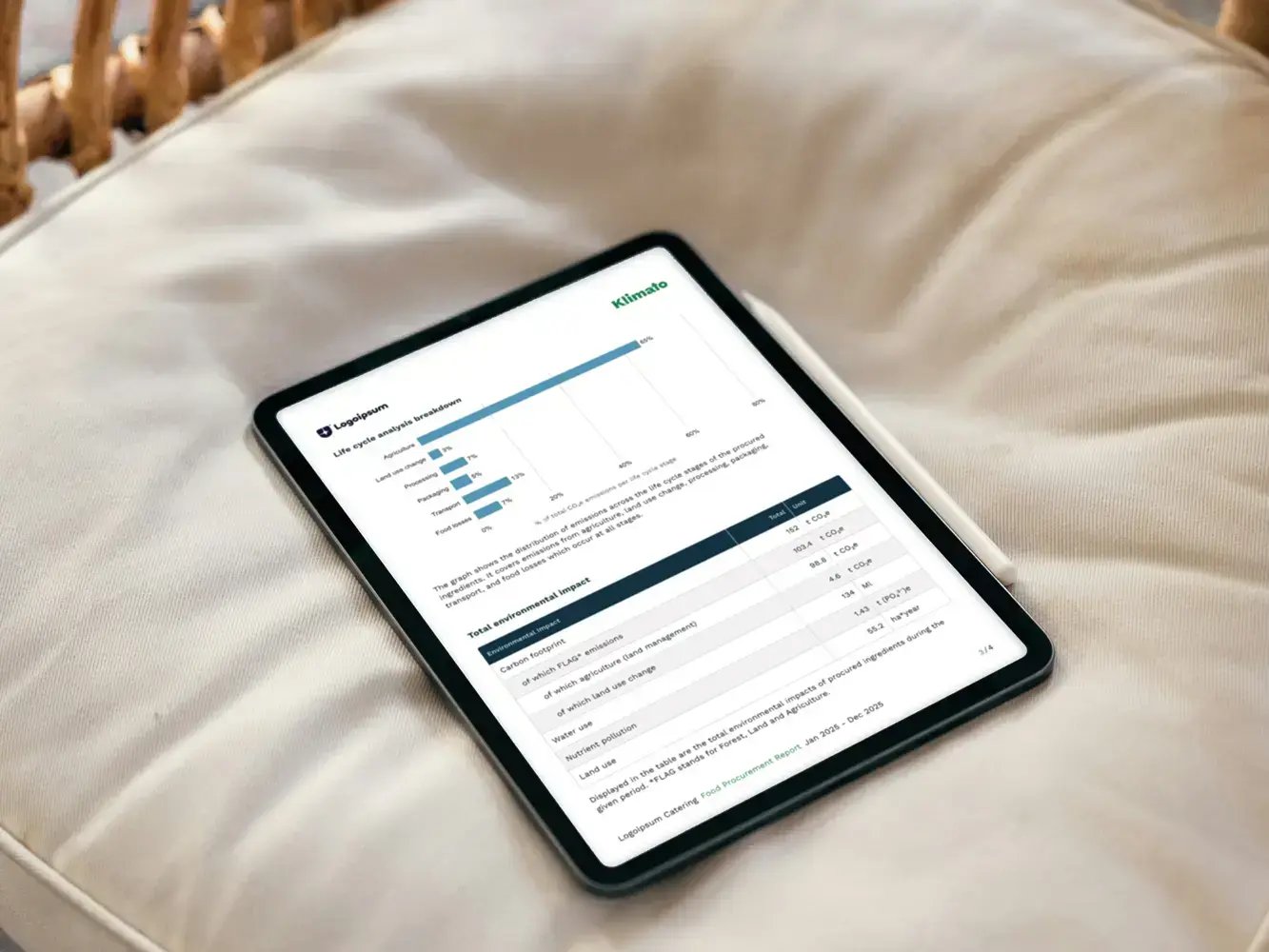
The Klimato Product Carbon Footprint methodology has been third-party reviewed by Bureau Veritas against the ISO 14067 and GHG Protocol Product Standard.
-
WWF One Planet Plate officially approves Klimato as a carbon calculator as part of their sustainability label.
These collaborations guarantee that Klimato’s emissions data remains credible, consistent, and compliant with the GHG Protocol and CSRD data requirements.
See the Science in Action
Methodology and validation are the foundation. See how it plays out for teams like yours.
Explore how hotels, restaurants, and caterers use Klimato's data to cut emissions, meet CSRD requirements, and report with confidence.